Tag Archives: journalism

If It Ain’t Broke…

The maxim reads, “If it ain’t broke, don’t fix it.” Advice which generally means don’t try to fix something that works. The odds are you’ll mess it up. In the context of the CBS blockbuster newsmagazine Sixty Minutes, it seems to apply. Unless of course, fixing something broken is not the goal of the new owners of CBS.

Just to bring you up to date, take a deep breath here. Skydance Productions, founded and controlled by David Ellison with a big investment by his father, Oracle founder Larry, bought Paramount Global, parent of CBS, from Paramount’s controlling owner, Shari Redstone. Now breathe in.

As I’ve reported previously, Paramount needed antitrust clearances from several federal agencies to clear the $8 billion merger and observers thought that might be difficult to achieve because Donald Trump was a frequent critic of CBS News, which he had sued, and the CBS program The Late Show with Stephen Colbert. Redstone had tried to remain apolitical during her stewardship of Paramount and CBS but faced with the need to get a green light for the sale, she settled Trump’s lawsuit against the advice of most legal advisors, who thought the suit frivolous. That cost CBS $16 million. The Skydance purchase was approved. Skydance is now seeking approval to buy Warner Brothers Discovery for about $111 billion. That would include CNN.

Just in case you have any doubt about the quid pro quo in the Paramount deal, the Federal Communications Commission, one of the agencies that had to sign off on the deal, released filings publicly on July 23, 2025, just one day before formally voting 2-1 to approve the acquisition. The filings were submitted by Skydance’s General Counsel, Stephanie Kyoko McKinnon, and addressed directly to FCC Chairman Brendan Carr. They served as a binding framework of concessions to secure regulatory approval.

The official filings outlined several explicit actions to eliminate diversity, equity, and inclusion (DEI) initiatives. Dismantling DEI Infrastructure: the combined company would completely eliminate Paramount’s “Office of Global Inclusion” and dissolve any teams or individual job roles focused on DEI. Scrapping Hiring Goals: Skydance committed to ending all numerical and “aspirational goals” related to the race, ethnicity, sex, or gender of job applicants and employee hires in the United States. Scrubbing Public Messaging: The company promised to remove all references to DEI from its public messaging, websites, social media, internal training materials, and corporate messaging. Ideological Bias Mandate: In a related move to satisfy the Trump administration’s scrutiny of CBS News, the filings also committed to establishing a corporate “ombudsman” for at least two years to investigate internal and external complaints of ideological bias.

It should not surprise anyone that Skydance fell right in line with the Trump administration’s demands. Both Larry and David Ellison are widely considered to be closely aligned with Donald Trump and his political movement. Both have developed strong business and personal relationships with Trump. Larry Ellison is a major bankroller of Republican campaigns.

David Ellison proceeded to cancel The Late Show with Stephen Colbert, the number one rated broadcast in late night. Trump cheered. He hired Bari Weiss, an opinion columnist who had started her own web site, to run CBS News as editor-in-chief. Wiess had no broadcast experience and proceeded with a wave of firings. She replaced co-anchors John Dickerson and Maurice DuBois with Tony Dokoupil on the CBS Evening News, the house that Walter Cronkite built. Both Dickerson and DuBois quit. Dickerson had been with CBS 16 years. DuBois 21 years. She then shut down the entire CBS News Radio department, firing 90 staff members and leaving 700 affiliates without a source of network news. That was the 99-year-old house that Edward R. Murrow built.

Then she turned her aim on Sixty Minutes. For the other actions, Ellison and Weiss justified themselves on financial grounds. But they did not supply convincing evidence to show that they were eliminating losing positions. In the case of Sixty Minutes, they didn’t even try to make that argument. It would have been a lie.

The 2025-2026 season of 60 Minutes experienced a significant ratings increase, averaging 9.1 million viewers. This represents a +9% growth in linear viewership and a +5% increase in the key adults 25-54 demographic compared to the prior season. In fact, 60 Minutes ratings on television have exhibited a resilient and broadly upward trend, retaining its title as the #1 news program in America for 52 consecutive years.

And for those who argue the future for CBS is on the digital realm, note that the show’s total reach has been bolstered by significant multi-platform growth, expanding its audience beyond traditional TV broadcasts. Digital metrics reflect massive gains… 2.5 billion video views across major social networks (more than double the previous year), 85% year-over-year growth on TikTok. This is not a failure. It is instead proof of legacy media making the transition to the digital age.

CBS’s motivation for attacking Sixty Minutes is transparently clear. Donald Trump doesn’t like the program, so the new owners don’t like it either.

In short order Bari delayed the broadcast of a report by correspondent Sharyn Alfonsi about the Trump administration’s deportation of Venezuelan men to the maximum-security El Salvador prison known as CECOT. A new statement from the Trump administration was edited in. Alfonsi was public and vocal in her outrage, calling the decision “political, not editorial.” Correspondent Anderson Cooper announced he would leave the program after twenty years. He did not explain why. He will continue to anchor Anderson Cooper 360° on CNN. Of course, Skydance may wind up owning that too.

After Sixty Minutes ended its season in May, Bari fired executive producer Tanya Simon, a 30-year veteran of the program, alongside executive editor Draggan Mihailovich and correspondents Sharyn Alfonsi and Cecilia Vega. Former CBS correspondent Steve Kroft and current correspondent Scott Pelley openly revolted.

Bari replaced Simon with Nick Bilton, a tech journalist and filmmaker with no traditional TV broadcast news experience. At his first meeting with the Sixty Minutes staff, Bilton was confronted by an outraged Pelley. Pelley relentlessly grilled the newly installed executive producer and accused Weiss of “murdering ’60 Minutes.’ She does not love this place; she was brought in to kill it and is doing exactly that.” Leaked audio was obtained by media outlets, which they haven’t posted but are reporting extensively.

The next day Bilton ripped Pelley’s “performative display of hostility” in a letter to the journalist, firing him “for cause.”

Dear Mr. Pelley:

I meant what I said in my letter last week to the 60 Minutes team: joining 60 Minutes is the honor of my career and I am grateful to be working alongside the people who have contributed to the most important television journalism brand this country has ever produced.

While I’m new to 60 Minutes, I’ve devoted my career to investigative journalism and storytelling. I started this job excited to collaborate and to benefit from the wisdom and experience of the 60 Minutes veterans, with you among them. For that reason, one of the first things I did in my new role was call you to talk and invite you to dinner.

It is a profound disappointment that you rejected that overture and chose ambush instead. Yesterday, you hijacked my first meeting with staff to disparage me, my qualifications, and my intentions with remarkable incivility and contempt. I welcome a diversity of viewpoints and respectful debate among the team, but this was nothing of the sort. Yesterday’s performative display of hostility — enacted in front of the staff instead of in a civil, private conversation — demonstrated that you have no interest in contributing to the future success of the show, or approaching my new tenure with a mind open to collaboration and progress.

I am here to deliver first-in-class news programming, not to make headlines about newsroom drama. I am eager to work alongside those who share this goal.

Despite yesterday’s misconduct, I had hoped that in sitting down with you today we could find a path forward together. You made clear that you are not interested in such a path. Your antipathy to the future of the show has come through loud and clear. And I have heard you.

I therefore write on behalf of CBS News, Inc. (“CBS”) to inform you that your employment with CBS is terminated for cause effective immediately. Enclosed is your formal termination letter.

Sincerely,
Nick Bilton
Executive Producer, 60 Minutes

Pelley released his own letter, repeating many of the arguments he reportedly made during the meeting.

There has never been anything in America like 60 Minutes.

The Sunday tradition is the most successful program of any kind in history. For more than a decade, its innovative growth on every major online platform has extended its reach to countless millions around the world. This spring, at the end of our 58th season, 60 Minutes grew rapidly with an unheard-of 9% jump in viewers on CBS.  

“60” has been the number-one program in America for decades because our beloved audience finds integrity, quality, and humanity in our stories. When stewardship of the program passed to my colleagues and me, our responsibility was to expand energetically into a new age of media technology while preserving the values our audience expects. Now, the new owner of our network is casting this legend aside, apparently to curry a moment of favor with the Trump administration.  

The waste is heartbreaking.

Last month, 60 Minutes lost its DNA when our entire senior leadership and two of our best on-air correspondents were cruelly fired without cause. Good people were silenced because they stood up for our audience. They stood for fairness against the forces of political bias; they stood for professionalism against chaos.
 
For my part, new management has instructed me to inject falsehoods and bias into a politically sensitive story. I’ve been told to include assertions that are unverified. To date, in every case, I have managed to ignore these instructions or refuse them. Recently, politicians have been invited to choose correspondents for interviews on the broadcast. Giving politicians control over 60 Minutes interviews is not how this is done. Finally, incompetence and unprofessionalism in the new management have wreaked havoc. In a case involving one of my stories, the entire program came within 19 minutes of not getting on the air at all.

At 60 Minutes, we have fought harder than anyone knows to save the program that became an American icon. We owed that to our millions of viewers. I am deeply moved by the thousands of wishes we have received to “keep up the good fight.” Most of the men and women of CBS News are still in that fight. But now the collapse of values at the top has become untenable. The leadership of 60 Minutes is no longer recognizable. The principles I hold dear are gone, and so I must leave as well.  

I depart after 37 years at CBS with one emotion—a heart brimming with gratitude for the men and women of CBS News who encouraged and enriched my work, very often at the risk of their own lives. I pray for a day when those people and their ideals are honored again—a day when sanity, competence, and courage return.  

Scott Pelley

Weiss addressed Pelley’s statement herself on the regular staff conference call the next morning….

Weiss: “I know I speak for myself, and I hope I speak for everyone here when I say that I’m only interested in working in a newsroom that is built on trust and mutual respect. We cannot do our work without it. That foundation was broken on Monday, and despite our attempts to engage with Scott Pelley and to find a way back, unfortunately we weren’t able to do so, and so we had to part ways.

We did not want that to happen, but that’s the path that he chose. That unfortunate outcome does not discount from the amazing contributions and work that Scott Pelley has done for CBS and for 60 Minutes over the course of his career.”

Bari Weiss

And that caused Pelley to send out a second statement of his own:

I’m saddened to see the transcript of the CBS News morning editorial meeting.

Bari Weiss knows wbat she said is not true. In the meeting on Tuesday, in which I was effectively fired, there was no effort of any kind to “find a way back,” as Weiss said in the editorial meeting. At no point did anyone in the Tuesday meeting suggest that there could be steps taken by either side that would lead to a resolution. Weiss and Tom Cibrowski were openly hostile from the start. ”Firing” was raised by Cibrowski in the first 15 seconds. No CBS executive, at any time, suggested “a way back.” To say so now is disingenuous. And they know it.

In fact, Weiss, Cibrowski and Nick Bilton refused to answer my questions. I asked Weiss a number of questions about why she fired the entire senior staff of 60 Minutes a few days before and without cause.

“I’m not answering that question,” she said.
I asked why she did not come to 60 Minutes’ offices to explain her actions.
“I’m not answering that question.”


Why did she fire 60 Minutes Executive Producer Tanya Simon?
“I’m not answering that question.”
Why fire correspondent Cecilia Vega?
“I’m not answering that question.”
Why fire correspondent Sharyn Alfonsi?
“I’m not answering that question.”


Throughout the meeting, the CBS executives were abrupt, dismissive and uninterested in dialogue. Suddenly, and to my surprise, Cibrowski declared, “This conversation is over!”
“Why?” I asked. “I’m happy to answer your questions.”
“This conversation is over!” Cibrowski repeated, raising his voice and standing to show me the door.
“I’m happy to keep talking,” I added.


No constructive dialogue was allowed by the CBS executives at any point. I was stonewalled for about 10 minutes and then, for no apparent reason, “This conversation is over.”


I am pained that the staff of CBS News was misled in the Wednesday morning conference call. These executives cannot gain the trust of the staff with lies. This is antithetical to everything ·we stand for and reveals contempt for what journalists do.

Scott Pelley

The lawyers can battle over contracts and obligations. I’m sure Pelley, who is 68-years old and has been earning millions each year for decades considered his action before taking his very public step to confront his new bosses. When you do that to the boss there are consequences. A bigger question will be what becomes of the property that revolutionized news programs on television. And what will become of responsible journalism overall.

Sixty Minutes was not perfect. A product created by humans never is. But Sixty Minutes tried its best to adhere to a standard and it did so better than most. I find the allegations Pelley makes in his letter most disturbing.

The Society of Professional Journalists, to promote ethical journalism, emphasizes four principles. I teach these to students in my course on Media Law and Ethics. The first is, “Seek truth and report it.” If journalists are denied the right to do that. If they are required instead to report what their owners, publishers, or government tell them to report. We are lost.

#####

Ted Turner 1938-2026

Some people are visionaries. Some people are great leaders. Few people can do both at the same time. Ted Turner was one of those special people.

In the wake of his death on May 6 at the age of 87, much has been written about his brash in-your-face style. I never met or worked for him. But I have many friends and colleagues who did. To a person, they sing his praises as a tough but fair leader. That he was a visionary is clear when you consider his impact on media in general and journalism in particular.

I remember sitting in the WBBM-TV newsroom in Chicago in 1979, when Turner announced his plans for CNN, the Cable News Network. I was a writer and producer at the CBS owned station and most of the people in our newsroom though Turner’s idea was crazy. I thought otherwise.

Turner has already had a major impact on the media landscape. The 1970s saw the spread of cable television systems across the nation. These stations repeated the broadcasts of the TV stations in their markets, offering better TV pictures but little else. Turner saw an opportunity. That’s what visionaries do.

Operating out of Atlanta, in 1970 Turner bought WJRJ-TV, a struggling UHF station launched in 1967. He renamed it WTCG (Turner Communications Group), jokingly claiming it stood for “Watch This Channel Grow”. On December 17, 1976, Turner used a satellite to beam WTCG’s signal nationwide, creating the first nationally distributed independent station. He allowed the cable companies to use it for free. He made money selling what was now advertising for a nation-wide audience. In 1979, the call letters were changed to WTBS. Over the years, it used various brands like “SuperStation WTBS,” “TBS Superstation,” and finally just “TBS”.

That was just the start.

Turner’s defining achievement was CNN, the Cable News Network. which he launched in 1980. At a time when television news was confined to fixed evening broadcasts, he gambled that audiences would want a constant stream of reporting, and he was right. CNN’s live coverage of the Persian Gulf War made the network a global force and helped normalize the modern era of 24-hour news.

He was never content with one success. Turner expanded into entertainment with TNT, Cartoon Network, and Turner Classic Movies after acquiring valuable film and animation libraries. He also bought the Atlanta Braves, giving the city a beloved team and tying his name to Atlanta’s rise as a major sports and media center.

Turner’s public image was as memorable as his business record. He was outspoken, impatient with convention, and comfortable being controversial. That directness earned him the nickname “The Mouth of the South,” but it also reflected a confidence that helped him bet on ideas others dismissed.

Beyond media, Turner devoted much of his later life to philanthropy and conservation. He gave about $1 billion to establish the United Nations Foundation, co-founded the Nuclear Threat Initiative, and used his land holdings to support wildlife restoration, especially bison conservation.

He also became one of the country’s great landowners and a passionate advocate for the natural world. His ranches, herds, and preservation efforts made him a larger-than-life figure in environmental circles, while projects like Captain Planet reflected his desire to teach younger generations about stewardship.

In his final years, Turner lived with Lewy body dementia, which he disclosed in 2018. Even as his health declined, his influence remained visible in the media world he helped create and in the institutions that grew from his philanthropy. He is survived by his children, grandchildren, and great-grandchildren. Turner had three wives, including the Oscar winning actress Jane Fonda. They all survive him.

Turner’s life was marked by audacity, reinvention, and outsized effect. He turned cable television into a global platform, made philanthropy part of his public identity, and left behind a media landscape that still bears his imprint. For better or worse, much of modern television carries the stamp of Ted Turner. He was one-of-a-kind.

####

Leaders Must Lead

“The Only Thing Necessary for the Triumph of Evil is that Good Men Do Nothing”

Author — Edmund Burke? R. Murray Hyslop? Charles F. Aked? John Stuart Mill?

Whoever is the author of that famous quote, it is a lesson well learned. Newspapers in America have frequently taken the lead, putting themselves at risk to make sure the public is well informed on subjects essential to their intelligent exercise of their most vital role, their vote for the people who will lead the country.

The Washington Post, after decades of leadership, has decided to do nothing in this election cycle. Its silence is deafening.

Read more

Form and Substance

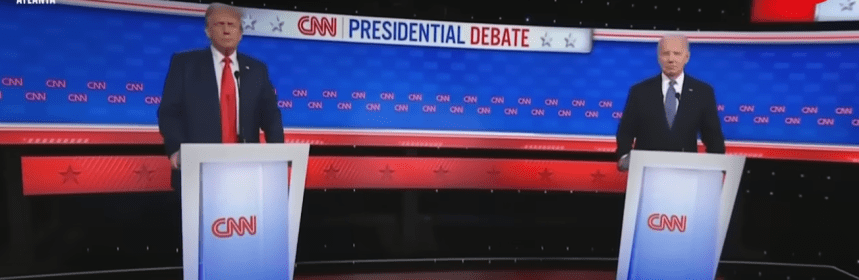
There is no sugar-coating it. President Joe Biden had a train wreck in his first 2024 debate with Former President Donald Trump. Fifty-one million watched. I wrote that I had concerns because Biden had seemed physically feeble during some appearances in the last year. Right as he walked out on the debate stage, I saw those signs, Biden walking slowly and speaking slowly and in a soft scratchy voice. I did not expect to see him ramble and become incoherent, but he did that more than once. At other times he was clear, combative, and effective, defending his administration and listing his accomplishments. But you could not fail to notice the other moments.

Read more

Charles Osgood

I heard him long before I met him. I remember sitting in the cafeteria CBS had set up in the basement of New York’s Madison Square Garden to feed the hundreds of staff members it had brought to the 1976 Democratic National Convention. Believe it or not, in those days the political conventions meant something and, in part because of legal requirements, they were extensively covered by broadcasters.

Just two years out of journalism school, I had been sent by my employer, WBBM-TV, the CBS owned station in my hometown Chicago, to manage our coverage. Along with me was a terrific video crew and a wonderful reporter who needed no supervision and little assistance, and an anchorman who definitely needed both. Those are stories for another day. Today, I just want to talk about the voice.

Read more

The Fox Lies Channel

Here’s a shocker. The people on the Fox News Channel lie. They knowingly lie. They lie all the time. Anyone with the common sense to distinguish between fact and fiction has known this for a long time. But the facts were never so clear as they are in a recent court filing by Dominion Voting Systems.

Here are the basic facts:

  • Dominion Voting Systems is suing Fox News for $1.6 billion for spreading false claims that Dominion rigged the 2020 presidential election.
  • A new court filing shows that Fox anchors and executives privately ridiculed former President Trump’s lies about the election even while promoting them on air.
  • The filing also reveals that Fox ignored warnings from its own staff, experts, and lawyers that the claims were baseless and harmful.
  • The filing includes internal emails, text messages, and transcripts that show how Fox hosts and guests knowingly spread misinformation to boost ratings and appease Trump.
Read more

The Justices Take a Landmark Step. Unwillingly.

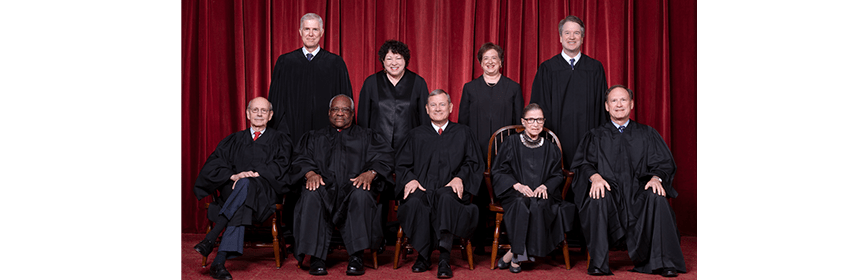
Mark your calendar. Beginning May 4 and ending May 13, the Supreme Court of the United States will make history. It took the coronavirus pandemic to do it, but over six dates the Court will hear oral arguments on ten cases, and the people of the United States will be able for the first time to hear those arguments as they happen.

This is happening because the Court, like most of us, is practicing Covid-19 social distancing protocols, with the justices and staff working mostly from their homes. The Court first delayed these arguments, then decided to hold the hearings via teleconference.

Read more
« Older Entries