Category Archives: Congress

What Would Tom Say?

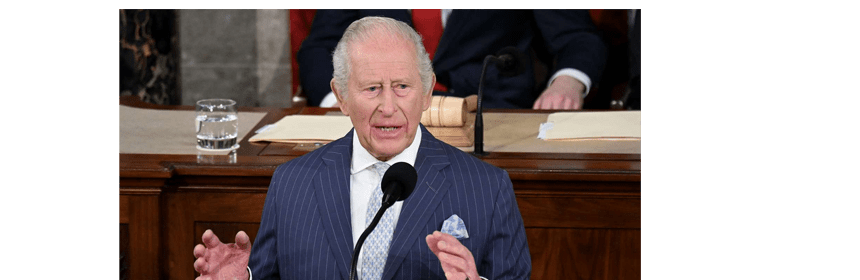
What Would Tom Say? That’s the question running through my mind as I watched Charles III, King of Great Britain and Ireland and lots of other places, address a joint session of the Congress of the United States of America.

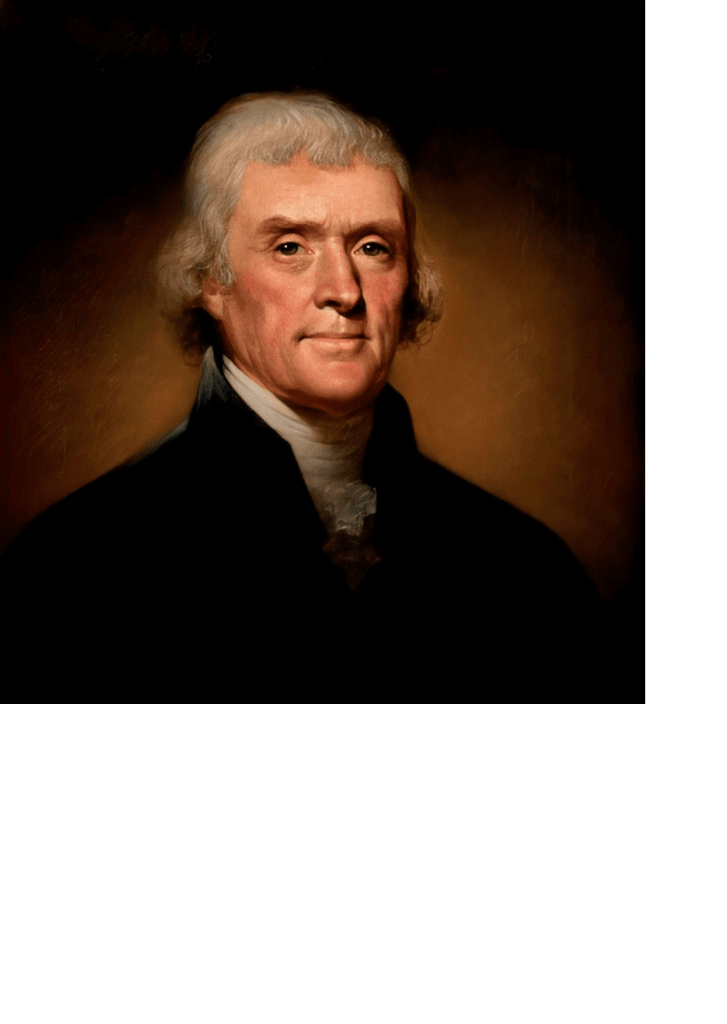
Tom is Thomas Jefferson, founding father, first Secretary of State, third President, and principal author of the Declaration of Independence from Great Britain by the thirteen colonies henceforth to be known as the United States of America.

In the Declaration, written 250 years ago, Jefferson accuses Britain’s then King George III of being a tyrant, “unfit to be the ruler of a free people.”

Jefferson asserts that “Governments are instituted among Men, deriving their just powers from the consent of the governed, — That whenever any Form of Government becomes destructive of these ends, it is the Right of the People to alter or abolish it.”

Which is what made Charles’ speech so extraordinary. The British monarch, subtly but unquestionably, lectured Donald Trump and the US Congress on the meaning of tyranny and a government’s responsibility to its people and the world. Charles was essentially holding a masterclass in democratic values, wrapped in diplomacy and charm.

He framed the moment as one of “great uncertainty,” said the US and UK face challenges “too great for any one nation to bear alone,” and declared that violent attacks on leadership “will never succeed”. He also emphasized that “executive power is subject to checks and balances,” which got attention because it sounded like a reminder about limits on presidential power.

The remarkable thing is how he pulled it all off, staying scrupulously nonpartisan on the surface while promoting centuries of common interests in areas where Trump has sought a sharp break from established US policy. Trump reportedly called it a “great speech.” Whether he caught all the subtext is another question.

Charles invoked the Magna Carta, the US Bill of Rights, “the rule of law, the certainty of stable and accessible rules, and an independent judiciary resolving disputes and delivering impartial justice” — and he did so on the same day the White House was pursuing new tariffs to circumvent a Supreme Court ruling. The timing was not lost on anyone.

After opening with a quote by Oscar Wilde, who was famously imprisoned for homosexual acts, Charles proclaimed that “it is the very fact of our vibrant, diverse, and free societies that gives us our collective strength,” a message fundamentally at odds with the Trump administration’s attacks on diversity.

Charles called for continued commitment to Ukraine and NATO, comments that came directly after Trump had openly expressed interest in withdrawing the US from NATO, citing what he felt was a lack of support from fellow members during the war with Iran.

He was unequivocal in rejecting Trump’s claim that NATO allies never sacrifice for the US, pointedly reminding Congress that after 9/11, when NATO invoked Article 5 for the first time, allied nations answered the call “shoulder to shoulder, through two World Wars, the Cold War, Afghanistan.”

Charles lamented the “disastrously melting ice caps of the Arctic,” in direct contrast to the White House’s position that climate change is a hoax. He urged Washington to avoid becoming “ever more inward-looking,” a direct pushback against Trump’s “America First” approach.

Whether Trump got the message is anyone’s guess. The critiques were wrapped in layers of diplomatic language, historical references (Magna Carta, English Common Law), and royal charm. Charles is a master of saying things with a smile that sting later on reflection. If you’re not listening for the subtext, you might just hear flattery.

What’s genuinely fascinating is that it almost doesn’t matter. The speech was addressed to Congress and the watching world just as much as to Trump. The lawmakers in that chamber, and the cameras broadcasting it, were the real audience for those pointed lines about judiciary independence and Ukraine.

Trump later called it a “great speech.” But the looks on the faces of Vice-President J.D. Vance and House Speaker Mike Johnson registered pain at several points. Both of them are actually interesting cases precisely because they do have historical literacy. Johnson is a constitutional lawyer by training, when Charles started citing Magna Carta and English Common Law as the roots of American democracy, Johnson would have felt every word of that. Vance has a Yale Law degree and has read widely. These aren’t men who would miss what Charles was doing.

The British Empire’s decline is actually a remarkably instructive case study precisely because it wasn’t conquered or suddenly collapsed. It hollowed out from a combination of forces, overextension, the costs of two world wars, rising nationalism in colonized nations, and critically, its own internal contradictions between preaching liberty while practicing empire. The decline was gradual, then sudden.

Charles, the literal embodiment of that former empire, was standing in Congress essentially saying we learned these lessons the hard way, please don’t repeat them. There’s something almost poignant about that. A king whose ancestors ruled a quarter of the world’s surface, now watching anxiously as the nation that replaced British dominance potentially walks toward some of the same traps.

Will we learn from history? Or repeat it?

####

13 Hours and $240 Later

Did you file your tax return? Are you getting a refund or do you owe money? Did you fill out the form yourself? Did you use tax software? Did you hire an accountant?

Each year we spend an average of $240 to prepare and file our annual tax returns, according to the IRS Taxpayer Advocate Service. We spend on average thirteen hours filling out the forms. People in other countries think we’re nuts.

While the U.S. requires taxpayers calculate their own liability, in approximately 36 countries the government provides a pre-filled statement of income and tax due based on third-party data.

How do other countries do it?

Denmark, Norway, and Sweden use Tax Agency Reconciliation: In this system, the tax authority generates a fully completed return. Citizens simply review it online and click “confirm” if they agree or submit amendments if they have additional deductions or income. The process can take as little as fifteen minutes and cost taxpayers nothing.

The United Kingdom and Japan use Exact Withholding: The system aims to withhold the exact amount of tax from paychecks throughout the year. For many salaried workers, this eliminates the need to file a year-end return entirely.

In Australia and France, the process is called Partial Pre-filling: The government fills in common data like salary and bank interest, but the taxpayer must still add more complex information manually.

Why doesn’t the United States use one of these methods?

Tax Code Complexity: The U.S. tax code is heavily reliant on individual-specific deductions and credits (like dependents or business expenses) that the IRS cannot easily predict without taxpayer input.

Reporting Lag: The IRS often doesn’t receive third-party W-2 and 1099 data until mid-year, long after the April filing deadline has passed.

Industry Lobbying: The multi-billion-dollar tax prep industry has historically lobbied against government-run filing tools to protect their market share.

The first item can be solved with a simplification of the U.S. Tax Code, which runs a whopping 6,871 pages (more than 75,000 if you add the IRS regulations, a 14-week reading assignment). The complexity of the code reeks of special provisions designed to serve special interests. It is why the average taxpayer believes, with justification, that the tax code is rigged against them and in favor of the rich and powerful individuals and corporations. See Senator Bernie Sanders’ (I-Vt) Corporate Tax Dodging Prevention Act.

The second item can also be handled with changes to IRS procedures. Already, third-party data must be filed with the IRS before the tax filing deadline. There are penalties if they are not. These penalties, which are money fines, can be raised and enforcement diligently applied. The late filings will undoubtedly be greatly reduced.

And then we come to the third item on my list. Like everything else in the good old U S of A, industry lobbying is the juggernaut elected officials at all levels of government, in desperate need of money to finance their elections, cannot resist.

For the 2026 tax filing season, the IRS expects to receive approximately 164 million individual income tax returns. Filing trends show a nearly even split between those who self-prepare using digital tools and those who hire professional assistance.

As of March 27, 2026, filing broke down like this:

2026 Count% Change from 2025
Total Returns Received88,424,000-1.3%
Returns from Tax Pros45,854,000-1.1%
Self-Prepared Returns41,017,000+1.4%
Average Refund Amount$3,521+11.1%

The DYI Market

The do-it-yourself tax preparation landscape is primarily divided among a few major players:

  • Intuit (TurboTax): Dominates with 60% of the market.
    • While its overall unit count for lower-revenue filers declined by 2% in 2025, its total consumer revenue grew by 10% ($4.9 billion) as it successfully pivoted toward higher-income filers and more complex returns.
  • H&R Block: Holds the second-largest position in the digital space.
    • In the broader digital and accounting landscape, H&R Block often competes head-to-head for visibility, capturing a 35.8% click share in paid search (PPC) compared to TurboTax’s 32.17%.
  • FreeTaxUSA: Emerged as a significant challenger for budget-conscious filers, capturing roughly 14.5% of recent search interest.

Lobbying Surge and Industry Influence

Now… look at the lobbying by tax providers:

  • Record Spending: In 2025, Intuit (TurboTax) and H&R Block spent a combined $7.1 million on federal lobbying—the highest annual total on record for these two firms.
  • Long-term Investment: Since 2003, these companies have invested more than $103 million in federal lobbying, frequently targeting efforts to prevent the IRS from developing its own tax preparation software.
  • Political Contributions: Intuit alone contributed $1 million to President Trump’s inaugural committee and distributed approximately $1.8 million to Republican members of Congress in 2024 to solidify opposition to free government filing.
  • Revolving Door Strategy: Nearly 70% of Intuit’s 84 lobbyists in 2025 were former government employees, many of whom previously served on key tax-writing committees in Congress.

The Death of Direct File

The IRS did have a pilot program to allow taxpayers to file returns directly with an online site. It was called Direct File. The Biden administration pushed for it, fighting against industry lobbying. It served 141,000 taxpayers with virtually no promotion in 2024. The Trump administration killed it.

The U.S. Department of the Treasury cited high operational costs ($138 per return in the pilot year) and limited participation as the primary reasons for shuttering the program. Despite the “limited use” claim, participation actually doubled from approximately 141,000 users in 2024 to nearly 300,000 users in 2025 before the program was cut. The Trump administration’s explanation was like any of the other lies to come out of this pay-as-you-go administration.

Intuit and H&R Block stocks soared on the news.

Think about the cost in time and money the next time you vote.

#####

Jack Smith Deposition

What were you doing in the evening of December 31, 2025? Were you sitting around waiting for major news to drop in Washington? I didn’t think so. I was noting the passing of 2025 and the arrival of 2026, as I suspect most of the people in the country were doing that New Year’s Eve. As least, that’s what Donald Trump and the Republicans were hoping.

That’s when the Republican-led House Judiciary Committee released former Special Counsel Jack Smith‘s deposition as part of their oversight investigation into the alleged “weaponization” of the Department of Justice. The committee, chaired by Rep. Jim Jordan (R-Ohio), was looking into the January 6 denier‘s belief federal law enforcement resources were misused for partisan purposes. Republicans claimed the investigations were politically motivated and intended to interfere with the 2024 election. 

Read more

Happy New Year!

We already know how 2025 has ended. Donald Trump has made it a wall-to-wall disaster with his illegal exercise of power with the goal of trashing the government and sweeping aside the norms of law and reason by which we have governed for 250 years. Even on New Year’s Eve he has vetoed a bipartisan law aimed at providing drinking water to tens of thousands. He has also reposted social media attacks on the memory of Tatiana Schlossberg, the granddaughter of President John F. Kennedy, who tragically died of cancer at the age of 35.

These acts of retribution, jealously, and sheer cruelty are standard procedure for Trump, who seems to draw perverse pleasure from these vile acts.

But there is hope that 2026 can be different. the new year is also an election year. That means we the people get a chance to reverse the mistake made in 2024 and strengthen the roadblocks that keep Trump from putting a crown on his head. in 2025 the Republican majority in Congress abdicated its traditional role as legislative partner and overseer of the executive. But every member of the House of Representatives faces reelection in 2026. So does one-third of the members of the Senate. Voters can make their disapproval heard loud and clear.

Buckle up. 2026 will be a rough ride. But we can make a difference. Some assembly will be required.

Happy New Year!

#####

The Donnie-Mander

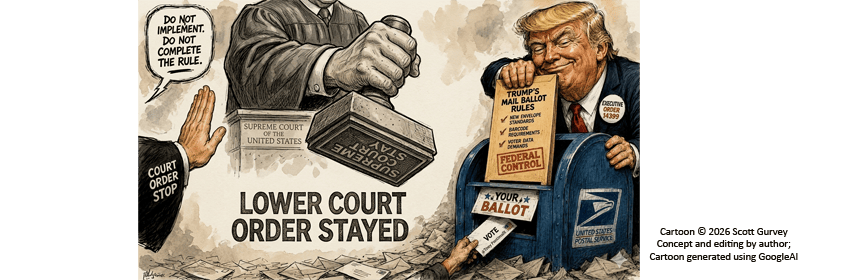
The Supreme Court, or rather the six Republican justices on the Supreme Court, have handed Donald Trump another victory. They issued a stay, blocking the order of a three-judge panel in Texas, which found the recent reapportionment of the state’s Congressional districts to be racially motivated and therefor illegal. The six, has been their pattern all year, issued their order in the dark of night on the “shadow” docket without an explanation or opinion. Greg Abbott, et al. v. League of United Latin American Citizens, et al.

The map the lower court panel blocked was seen as one of the most aggressive mid‑decade gerrymanders in recent history. The Supreme Court stay allows Texas to proceed with the new map, which analysts say could give Republicans five additional U.S. House seats in the 2026 midterms.

Gerrymandering 101

What, in a nutshell, is gerrymandering? The Encyclopedia Britannica has a wonderful explanation from which I have borrowed the graphic above. The American Constitution requires that every ten years we conduct a “census” to apportion representation in the House of Representatives. The Fourteenth Amendment, Section 2 begins, “Representatives shall be apportioned among the several States according to their respective numbers, counting the whole number of persons in each State, excluding Indians not taxed.”

Once the number of representatives is determined by the census, it is up to each state to draw the maps of legislative districts. Because the states have statewide elections for senators, governors, and to decide members of the Electoral College, there is data on how the state as a whole divides between the parties. Using the graphic above we find of a total population of fifty, thirty (60%) are orange voters while twenty (40%) are purple voters.

From that starting point, the state could draw “fair” maps which distributed the people in such a manner to generate three orange and two purple representatives, proportionate to the statewide electorate. But the state could also gerrymander, producing an outcome, using the example on the right above, of five orange and no purple representatives, or two orange and three purple representatives.

The term “gerrymander” was coined as a portmanteau of the name Elbridge Gerry and the word “salamander.” Gerry, who was the governor of Massachusetts, signed a redistricting law that redrew district lines in a way that favored his party. Critics said the new map created a weirdly shaped district which resembled a salamander. A satirical cartoon published in the Boston Gazette on March 26, 1812, popularized the word. The cartoon depicting the irregular shape helped turn a local political attack into a lasting political term.

The Donnie-Mander

The political parties have a long history of manipulating their maps to various degrees every ten years when the new census requires a reallocation of seats. But two things make this year’s manipulations unusual. First, this is a mid-census reapportionment. The last census was in 2020 with new maps taking effect in 2022 in most states. Second, this mid-census revision to the 2022 map came at the direct demand of Donald Trump. Texas’s Republican Governor Greg Abbott heeded Trump’s call and generated a new map that may add as many as five Republicans to the House in 2026. That is the map the Supreme Court now says can be put into place. With the Republican control in the House hanging on a tiny seven vote majority, Trump is clearly afraid the Democrats could gain control in the next election.

This Trump inspired Donnie-Mander, now sanctified by the Supreme Court, has set off an unprecedented arms race of mid-decade redistricting across the country. Missouri and North Carolina have passed their own Republican leaning maps. California voters approved a map designed to cancel out the Texas gains. Virginia and Maryland are working on new maps favoring Democrats. Illinois is considering one. Florida and Indiana are working on revisions on the Republican side.

National Public Radio has been keeping score on its web site. As of this writing they show a slight gain for Republicans on the basis of district voting patterns in next year’s election. Considering his atrocious polling numbers, Trump is going to need all the help he can get. The Center for Politics at the University of Virginia, one of my favorite pollsters, sees 2026 shaping up to be much too close to call.

Congress has over the years tried to set standards and take control of the redistricting process. It has never been able to pass a law to bring order out of the chaos.

The majority on the Supreme Court, by allowing these partisan mid-decade redistrictings, has created a free-for-all which is a lose-lose for the American people. But 2026 does promise to be a good show.

######

No Kings

Anywhere from five to eight million people turned out for the second “No Kings” protests across the nation. The rallies took place in over 2,600 locations across the United States.

I have first or secondhand knowledge of protests in New York, Washington D.C., Chicago, Portland, San Francisco, and Los Angeles. They were peaceful. Crowds were almost jubilant at having an opportunity to voice their opposition to the actions of the Trump administration. The only place I heard Trump supporters showed up to counter the protest was Palo Alto, California. No Kings protesters refused to engage with the Trumpies, who they feared were trying to provoke them.

Read more

The Supremes 2025

The first Monday of October is upon us. This is the day the Supreme Court begins its new term. The justices have been on recess and away from the Capital since the end of June. But they have had a busy summer. We just don’t know much about what they were doing.

The Supreme Court is shrouded these days. Literally and figuratively.

Read more
« Older Entries