Jack Smith Deposition
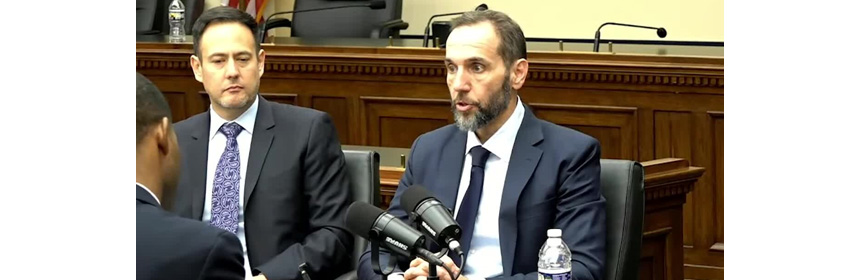
What were you doing in the evening of December 31, 2025? Were you sitting around waiting for major news to drop in Washington? I didn’t think so. I was noting the passing of 2025 and the arrival of 2026, as I suspect most of the people in the country were doing that New Year’s Eve. As least, that’s what Donald Trump and the Republicans were hoping.
That’s when the Republican-led House Judiciary Committee released former Special Counsel Jack Smith‘s deposition as part of their oversight investigation into the alleged “weaponization” of the Department of Justice. The committee, chaired by Rep. Jim Jordan (R-Ohio), was looking into the January 6 denier‘s belief federal law enforcement resources were misused for partisan purposes. Republicans claimed the investigations were politically motivated and intended to interfere with the 2024 election.
They made a big play of issuing a subpoena to Smith, who had been appointed an independent special counsel in November 2022 by attorney general Merrick Garland. Smith was to oversee two preexisting Justice Department criminal investigations into Trump’s actions. Smith ultimately prevailed on two grand juries to return criminal indictments against Trump.
Jordan, who famously ignored a subpoena issued for his testimony by the special committee investing the January 6, 2021, insurrection at the Capitol, figured he would expose evidence of persecution of Trump by forcing Smith to testify. It didn’t work out as Jordan intended.
Smith and his legal team requested that the deposition be public to correct what they called “many mischaracterizations” of his office’s work. Although the committee insisted on a private session, they eventually released the full transcript and video on New Year’s Eve in an obvious attempt to minimize public impact. That didn’t work out as the Republicans expected either.
As always, I encourage you to read the 255-page transcript, available here. And to view the video of the testimony, all eight hours of it, available here. Make up your own mind.
While Republicans used the release to highlight what they viewed as overreach, Smith used the testimony to document that he had developed “proof beyond a reasonable doubt” that Trump engaged in criminal schemes. He defended the investigations as being built primarily on evidence from Trump’s own Republican allies and close associates.
Smith was calm, almost boring. He Just facts law. He listed a devastating record and concluded what many right-wing institutions are still pretending they do not see. Donald Trump is guilty. Not metaphorically. Not rhetorically. Legally.
Smith stated, under oath, that the attack on the Capitol does not happen without Trump. Not inspired by Trump. With Trump. Smith was laying foundation. Prosecutors speak this way when they are confident the record will hold.
The deposition also demolished the most persistent lie still out there, that Trump’s actions were merely speech. Smith drew a bright line between protected expression and a coordinated scheme built on knowing falsehoods designed to obstruct a constitutional process. Trump was told repeatedly that he lost the election. He was told specific fraud claims were false. He did not stop. He summoned supporters to Washington. He directed them to the Capitol. He refused to intervene while the attack unfolded. He praised and then pardoned those who engaged in insurrection against the United States of America.
“The president was preying on the party allegiance of people who supported him,” Smith said. “The evidence that I felt was most powerful was the evidence that came from people in his own party who … put country before party and were willing to tell the truth to him, even though it could mean trouble for them.”
Smith repeatedly drew on Republicans to make the case against the man they wanted to be president but who they acknowledged had been defeated. Smith said former Vice President Mike Pence and several of the GOP elector nominees, including Pennsylvania’s Lawrence Tabas, have fit that category and made strong trial witnesses.
“That witness, Mr. Tabas, was of a similar group of witnesses who — these are not enemies of the president. These are people in his party who supported him,” Smith continued. “And I think the fact that they were telling him these things … would have had great weight and great credibility with a jury.” Smith said he came to believe that Trump’s Jan. 6, 2021, tweet attacking Pence while he was at the Capitol “without question” exacerbated the danger to Pence’s life.
Smith insisted he never communicated with then President Joe Biden or White House staff before or during his investigation. He also said the timing of Trump’s announcement for president, his crowded calendar of criminal cases leading up to the 2024 election and the sensitivity of certain allegations did not influence his decisions. He emphasized that he regularly consulted with Justice Department officials to ensure he abided by its guidelines.
Smith did cast doubt on one of the January 6 committee’s star witnesses. The Republicans seized on that testimony as they tried to blunt the impact of overall release. Cassidy Hutchinson, the former White House aide who in 2022 testified against Trump in a dramatic hearing before the Democratic-led January 6 committee. Hutchinson said another Trump aide told her that a furious Trump lunged for the wheel after learning the vehicle he was in was headed for the White House instead of the Capitol after his incendiary speech. Trump has long denied the incident.
Smith told congressional investigators his office spoke to at least one officer who was in the SUV for Trump’s return to the White House that day. “[M]y recollection with Ms. Hutchinson, at least one of the issues was a number of the things that she gave evidence on were secondhand hearsay, were things that she had heard from other people and, as a result, that testimony may or may not be admissible, and it certainly wouldn’t be as powerful as firsthand testimony.”
The January 6 committee questioned Hutchinson in part because Mark Meadows, Trump’s the Chief of Staff and her direct boss, declined to sit for an interview. Though Hutchinson’s story was among the most explosive aspects of its public hearings, the case the committee made, that Trump systematically attempted to raise doubt about the 2020 election results and lean on state and federal officials to overturn it, was the product of hundreds of interviews, many from Trump’s closest aides and allies.
Smith also addressed the classified documents case, saying the case focused on willful retention and obstruction, not accidental possession. Subpoena noncompliance, false statements, and document movement were central to the charges.
These cases died not because they were unjustified. They died because American voters sent Trump back to the White House. As president once again, he shut the cases down.
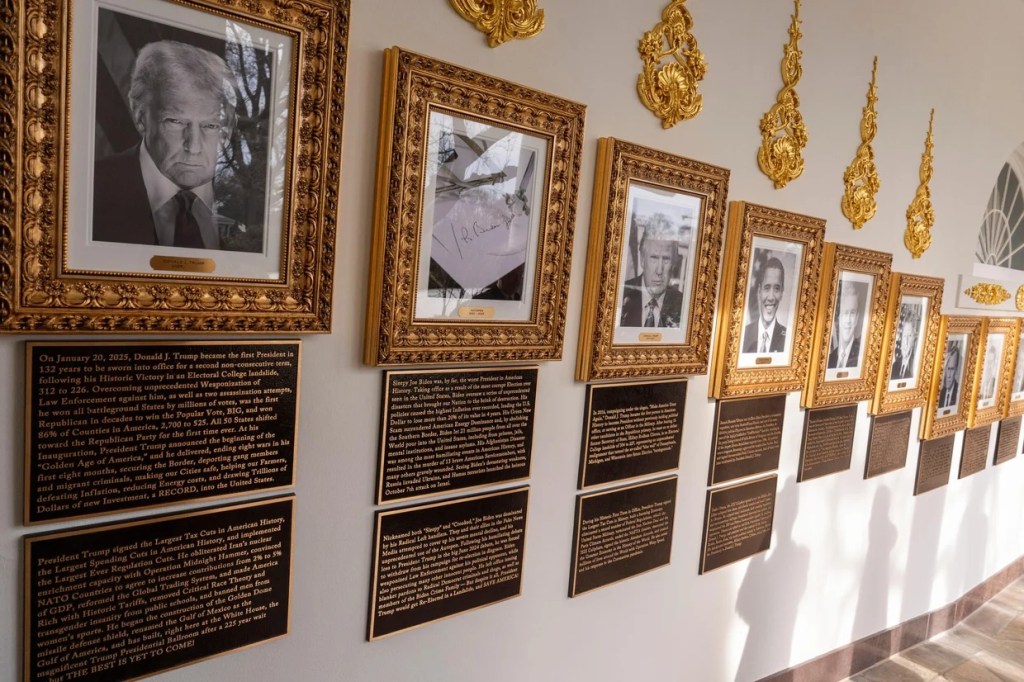
It is now five years since the attack on the Capitol. Trump is back in office. He has pardoned 1,600 people indicted, tried, and convicted for their roles in the January 6 riot. He has posted a fantasy account of the insurrection on the official taxpayer funded White House web site. It is as if we have fallen through the looking glass into an alternate universe. I think Jack Smith’s universe is reality.
#####





 Scott Gurvey's Public Offerings