Category Archives: economics

Trump on California, Burn

This is what our once and future president wrote this morning about the tragic fires in the Los Angeles area which have, as of this writing, taken two lives, forced tens of thousands out of their homes, and caused millions of dollars’ worth of property damage.

How can anyone be such a monster? And how could we have elected him once again?

Newsom‘s office has dismissed these claims as “pure fiction” and accused Trump of playing politics. The governor has focused on ensuring that firefighters have the resources they need to combat the fires.

Read more

President Musk

What do you get the guy who has everything? Better still, what does the guy who has everything buy for himself? Elon Musk bought himself a president.

Musk spent about $277 million to back Donald Trump in his successful campaign to win a second term. In return, Trump apppointed Musk, along with Vivek Ramaswamy, an entrepreneur and former candidate turned rabid Trump supporter, to run the grandiosely named “Department of Government Efficiency (DOGE)“. This sounds official but in fact is a sort of advisory panel with no legal authority, charged by Trump to focus on regulating government spending and to cut regulations. How much influence Musk has is a function of how much attention Trump pays to him. It appears $277 million buys you a lot of attention.

Read more

Here We Go Again

It was about 3:00am the day after the election in 2016 when I came to the conclusion that Donald Trump would win, beating Hillary Clinton. This time, I knew it at midnight.

Read more

It’s Still the Economy, Stupid

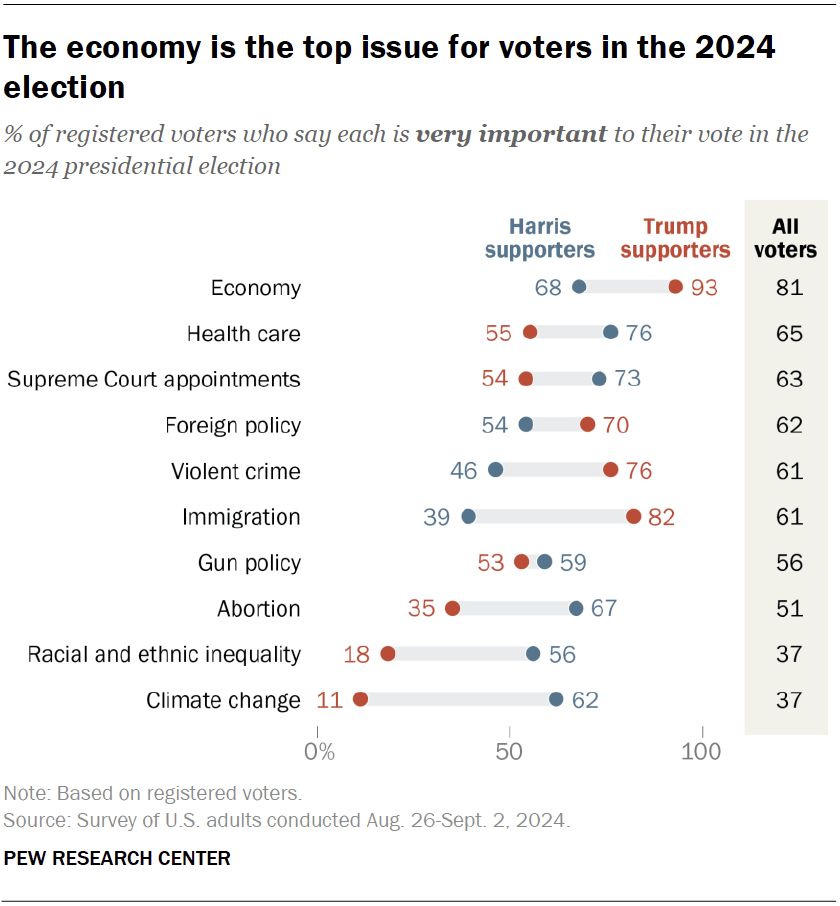
One thing the political polls agree on is the number one concern on the minds of voters. It’s the economy. It is ALWAYS the economy.

The problem, at least for Vice President Harris, is that what voters call the economy is not what economists call the economy. What voters mean when they say economy is prices as in, the price of a gallon of gasoline, the price of a bottle of milk, the price of a dozen eggs. Those prices are up. And as is usual, the incumbent gets the blame.

Read more

Boeing Blows Another One

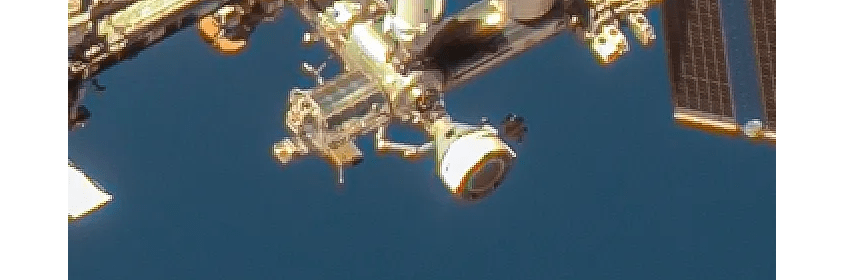
Boeing’s Starliner capsule is seen docked to the International Space Station in this zoomed-in view of an image captured by Maxar Technologies’ WorldView-3 satellite on June 7, 2024. (Image credit: Maxar Technologies via NASA)

Update Sept 7, 2024

The Starliner capsule returned to Earth safely from the International Space Station last night, without the two astronauts it took up there in June. Boeing and NASA engineers will review the vehicle’s performance on reentry as they consider the future of the program.


Two astronauts who flew to the International Space Station on Boeing’s Starliner spacecraft will return to Earth next year on a SpaceX “Crew Dragon” vehicle, their planned eight-day test flight turned into a two-thirds of a year ordeal. It is yet another of a long list of failures by the once venerated aerospace company in recent years.

Read more

Form and Substance

There is no sugar-coating it. President Joe Biden had a train wreck in his first 2024 debate with Former President Donald Trump. Fifty-one million watched. I wrote that I had concerns because Biden had seemed physically feeble during some appearances in the last year. Right as he walked out on the debate stage, I saw those signs, Biden walking slowly and speaking slowly and in a soft scratchy voice. I did not expect to see him ramble and become incoherent, but he did that more than once. At other times he was clear, combative, and effective, defending his administration and listing his accomplishments. But you could not fail to notice the other moments.

Read more

Warnock, Geschke, and Adobe

I was sorry to hear about the recent passing of John Warnock. I have a feeling many of you do not recognize that name. Nor will you recognize the name Charles Geschke, who was Warnock’s business partner and who died in 2021. But I am quite sure you recognize the name PDF. And the PDF is without question Warnock and Geschke’s greatest invention.

Warnock and Geschke were pioneers of the high-tech computer revolution. Like most successful entrepreneurs, they identified a problem and set out to solve it. Unlike most of the visionaries who made the west coast their home, Warnock and Geschke were quiet, unassuming, and shy.

In the 1990s, even though I was the New York based bureau chief for public television’s Nightly Business Report, I was allowed to travel to San Francisco every December and set up shop for a week at the Fairmont Hotel. We covered an annual Business Week conference titled, “The Digital Economy.” But we also spent a few days visiting the headquarters of Silicon Valley trailblazers and telling their stories.

Almost to a man, and they were almost all men in those days, they were thrilled to sit down in front of our camera to brag about their inventions. Warnock and Geschke were exceptions. They were happy to welcome us to the San Jose headquarters of Adobe, the company they founded in 1982. But they wanted us to interview their employees, the developers and product managers. It took a lot of persuasion to get the two founders in front of our camera. That was rare then and it remains rare today.

Warnock and Geschke met while working at the Palo Alto Research Center of Xerox, now part of SRI International. At Xerox PARC they developed a page-description language, something designers would use to instruct Xerox’s new laser printers how to draw a page. In those days virtually every different model of printer responded to a separate set of drawing commands. Warnock and Geschke’s vision was to create a standard every printer could follow. Xerox did not agree and kept their invention for use on Xerox equipment only.

So, the two left Xerox, started their own company, and created a new language which they called Postscript. A revolutionary breakthrough in printing technology, PostScript was the first printing software that enabled users to print pages that included text, line art and digitized photos. Adobe let all content creators use Postscript without a licensing fee. But they designed, and sold to the printer manufacturers, the circuits which interpreted Postscript and generated the signals the printer needed to generate the page. Apple and the Apple LaserWriter were the first company and product to use the system. With this, modern desktop publishing and word processing programs were born. By 1987, Adobe’s PostScript had become the industry-standard printer language.

Adobe did not stop there. Adobe Illustrator was released in 1987. Photoshop in 1990. The PDF came in 1993. The Portable Document Format was designed to allow the exchange of electronic versions of pages regardless of the software or device which created them or the printer or display which regenerated them without compromising the original. As Adobe’s Senior Vice President of Cloud Technology, Bob Wulff, describes it, “PDF allows the user to view a file precisely—down to the pixel, essentially, of what the author had intended.”

Today the PDF is ubiquitous:

  • PDF has become the standard file format for sharing documents. Businesses, schools, governments, and individuals use it all over the world.
  • PDF is also used to create electronic books.
  • PDF is a secure file format, which makes it ideal for sharing sensitive documents.
  • PDF is easy to use and can be viewed on any device.
  • PDF has had a major impact on the way we work and collaborate. It has made it possible for people to share documents more easily and securely.

Warnock and Geschke are gone now. But Adobe’s legacy of innovation continues. It has, for example, been actively applying artificial intelligence techniques throughout its product line. That is a story for another time. And it has revolutionized its business model. Most of its products are now in a bundle, Adobe Creative Cloud, for which Adobe charges a monthly subscription. Other companies are adopting variants of this model, known as Software as a Service.

By the way, Warnock and Geschke may have been camera shy, but once I got them to agree they produced a great interview. It almost always turned out that way when I had a reluctant subject. I checked in with both men every now and then over the years. They were pioneers of the computer age. Think about them when you print on your laser printer. They will be remembered.

#####


« Older Entries Recent Entries »