Category Archives: commentary

David McCallum

It was my last year of grade school, and I faced all the usual crises. My family was about to move about five miles closer to the center of the city because my parents wanted me to attend a different high school than the one serving our current neighborhood. I was about to lose most of my grade school friends because only two others were switching to the same high school. And for some reason the girls, who I had recently become interested in, were not so much interested in our current hero, The Man from U.N.C.L.E., Napoleon Solo, played by Robert Vaughn. They had eyes only for the blood sidekick Illya Kuryakin, played by David McCallum.

McCallum died yesterday in New York City at the age of ninety.

Read more

Star Stuff

On Sunday September 24, 2023, just before noon eastern time, a sample capsule containing about one pound of the asteroid Bennu should arrive in Utah. Go ahead. Back up. Read it again. Amidst all the angst of our everyday lives, which is the usual subject of this column, we have a wonder like that to contemplate.

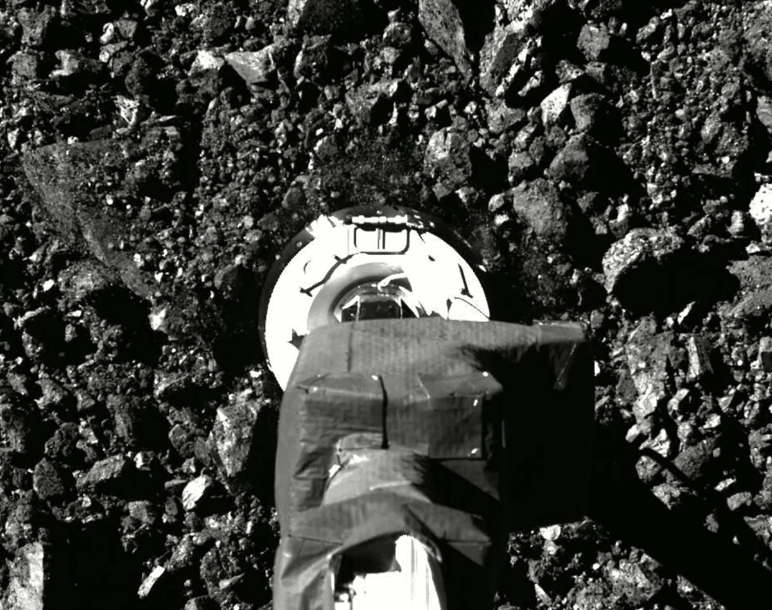
The capsule will have come from the OSIRIS-REx spacecraft. OSIRIS-REx was launched on September 8, 2016, flew past Earth on September 22, 2017, and rendezvoused with Bennu on December 3, 2018. It spent the next two years analyzing the surface to find a suitable site for landing.

On October 20, 2020, OSIRIS-REx touched down on Bennu and successfully collected a sample. Though some of the sample escaped when the flap that should have closed the sampler head was jammed open by larger rocks, NASA is confident that they were able to retain between 400 g and over 1 kg of sample material, more than the 60 g (2.1 oz) minimum for success.


The sample capsule will be released when the spacecraft reaches an altitude of 63,000 miles above the Earth’s surface. The capsule will then be sent spinning towards the atmosphere below and will pierce Earth’s atmosphere at 10:42 a.m. EDT, coming to rest near a military base in the Utah desert. A recovery team will board four helicopters and head out into the desert to retrieve the capsule as quickly as possible to avoid contaminating the sample with Earth’s environment. Once located and packaged for travel, the capsule will be flown via helicopter to a temporary clean room on the military range, where it will undergo initial processing and disassembly in preparation for its journey by aircraft to NASA’s Johnson Space Center in Houston, where the sample will be documented and distributed for analysis to scientists worldwide.

There have been previous missions that have returned samples from outer space to Earth. Between 1969 and 1971, the Apollo program carried out six missions to the surface of the moon. The astronauts brought back a total of 842 pounds of lunar rocks, core samples, pebbles, sand, and dust from the lunar surface.

NASA’s Stardust mission, launched in 1999, flew past the comet Wild 2, collecting thousands of dust particles from the comet’s coma and returning them to Earth for laboratory analysis. Japan’s Hayabusa, launched in 2003, successfully returned samples from the asteroid 25143 Itokawa in 2010. Japan’s Hayabusa 2 returned samples from asteroid 162173 Ryugu in 2020.

If successful, OSIRIS-REx will be the first United States spacecraft to return samples from an asteroid.

All these missions have significantly contributed to our understanding of asteroids and the early solar system. The samples returned by these missions provide valuable insights into the composition, structure, and history of asteroids, as well as clues about the formation of our solar system and the origins of life on Earth.

Bennu was chosen as the target of this study because it is a “time capsule” from the birth of the Solar System. Bennu has a very dark surface and is classified as a B-type asteroid, a sub-type of the carbonaceous C-type asteroids. Such asteroids are considered primitive, having undergone little geological change from their time of formation. In particular, Bennu was selected because of the availability of pristine carbonaceous material, a key element in organic molecules necessary for life as well as representative of matter from before the formation of Earth. Organic molecules, such as amino acids, have previously been found in meteorite and comet samples, indicating that some ingredients necessary for life can be naturally synthesized in outer space.

Which doesn’t mean we will find a place we can relocate to in our neighborhood any time soon.

#####

Who the Hell is Tommy Tuberville?

Embed from Getty Images

9-11 Insert

This is the twenty-second year since the 9-11 attacks. An entire generation has passed. My memories of that day written two years ago can be found posted here.


In a Washington Post op-ed published on Monday night, the civilian secretaries of the U.S. Army, Navy and Air Force sharply criticized Sen. Tommy Tuberville, the Alabama Republican “who is blocking the confirmation of our most senior military officers,” as they put it. It was a most remarkable document. And one which must have been a great comfort to the military leadership in China, Russia, Iran, and North Korea.

Tuberville is an anti-choice conservative and a staunch supporter of Donald Trump. He is an Alabama dilettante who decided after a successful career as a football coach, he might like to be a United States senator. The people of Alabama, one of the least educated of the United States, agreed and sent him to Washington in 2021.

Tuberville has single-handedly placed a “blanket hold” on the appointments of all “general and flag officer nominees” in all branches of the U.S. military. He strongly opposes what he calls “Defense Department policies that ensure service members and their families have access to reproductive health” — and, more specifically, to abortion services — “no matter where they are stationed.” The gist of this policy is that service members in states where abortion is now illegal or sharply restricted may travel at government expense to jurisdictions where it is permitted, a policy Tuberville and other Republicans strongly oppose.

In the Post op-ed, Navy Secretary Carlos Del Toro, Air Force Secretary Frank Kendall, and Army Secretary Christine Wormuth write that the policy on reproductive access is fully legal and “critical and necessary to meet our obligations to the force.” Tuberville‘s hold, they assert, is “putting our national security at risk” by preventing the Pentagon “from placing almost 300 of our most experienced and battle-tested leaders into critical posts around the world“:

Three of our five military branches — the Army, Navy, and Marine Corps — have no Senate-confirmed service chief in place. … Across the services, many generals and admirals are being forced to perform two roles simultaneously. … Each of us has seen the stress this hold is inflicting up and down the chain of command, whether in the halls of the Pentagon or at bases and outposts around the world.

Washington Post Op-Ed, Navy Secretary Carlos Del Toro, Air Force Secretary Frank Kendall, and Army Secretary Christine Wormuth

Tuberville‘s claim that “holding up the promotions of top officers does not directly damage the military,” the three secretaries conclude, “is wrong — plain and simple.”

So, who is this guy who doesn’t mind doing the work of our foreign adversaries? He’s a Republican of course. Elected in 2021, he was the head football coach at Auburn University from 1999 to 2008. He was also the head football coach at the University of Mississippi from 1995 to 1998, Texas Tech University from 2010 to 2012, and the University of Cincinnati from 2013 to 2016. In 1976 he was awarded a B.S. in physical education from Southern Arkansas University. SAU’s ranking in the 2022-2023 edition of Best Colleges, Regional Universities South, is #94.

Adding to his unimpressive educational record, Tuberville has no military experience. And here’s the best part of the Tuberville saga, Tommy reportedly doesn’t live in Alabama! A published review of campaign finance reports and property documents related to Tuberville “indicate that his home is actually a $3 million, 4,000-square-foot beach house he has lived in for nearly two decades in Santa Rosa Beach, Florida.”

If true, this would seem to make Tuberville ineligible to represent Alabama in the Senate. The Constitution itself clearly states:

Every member of the Senate shall be . . . at the time of his election, a resident of the state from which he shall be chosen.

Constitution, Article 5, section 3

I have been waiting for the Senate, which details the qualifications for Senators on its own web site, to begin an investigation. I will not hold my breath. This is just what the people of Alabama and the Republican party apparently want in a senator.

Yes, there is a way to override the hold. The Senate rules allow for a process called cloture, which can be used to end a filibuster or break a hold on a nomination or bill. Cloture requires the support of sixty senators to pass, which means that it can be difficult to achieve in a closely divided Senate. The Democrats can’t do it alone. No Republican is willing to break the hold.

It is further evidence that, whatever the original plan for the United States Senate was, it is one of the framers most failed experiments. Only an amendment to the Constitution can tame the monster the Senate has become. And that will not happen any time soon.

The country be damned.

#####

Warnock, Geschke, and Adobe

I was sorry to hear about the recent passing of John Warnock. I have a feeling many of you do not recognize that name. Nor will you recognize the name Charles Geschke, who was Warnock’s business partner and who died in 2021. But I am quite sure you recognize the name PDF. And the PDF is without question Warnock and Geschke’s greatest invention.

Warnock and Geschke were pioneers of the high-tech computer revolution. Like most successful entrepreneurs, they identified a problem and set out to solve it. Unlike most of the visionaries who made the west coast their home, Warnock and Geschke were quiet, unassuming, and shy.

In the 1990s, even though I was the New York based bureau chief for public television’s Nightly Business Report, I was allowed to travel to San Francisco every December and set up shop for a week at the Fairmont Hotel. We covered an annual Business Week conference titled, “The Digital Economy.” But we also spent a few days visiting the headquarters of Silicon Valley trailblazers and telling their stories.

Almost to a man, and they were almost all men in those days, they were thrilled to sit down in front of our camera to brag about their inventions. Warnock and Geschke were exceptions. They were happy to welcome us to the San Jose headquarters of Adobe, the company they founded in 1982. But they wanted us to interview their employees, the developers and product managers. It took a lot of persuasion to get the two founders in front of our camera. That was rare then and it remains rare today.

Warnock and Geschke met while working at the Palo Alto Research Center of Xerox, now part of SRI International. At Xerox PARC they developed a page-description language, something designers would use to instruct Xerox’s new laser printers how to draw a page. In those days virtually every different model of printer responded to a separate set of drawing commands. Warnock and Geschke’s vision was to create a standard every printer could follow. Xerox did not agree and kept their invention for use on Xerox equipment only.

So, the two left Xerox, started their own company, and created a new language which they called Postscript. A revolutionary breakthrough in printing technology, PostScript was the first printing software that enabled users to print pages that included text, line art and digitized photos. Adobe let all content creators use Postscript without a licensing fee. But they designed, and sold to the printer manufacturers, the circuits which interpreted Postscript and generated the signals the printer needed to generate the page. Apple and the Apple LaserWriter were the first company and product to use the system. With this, modern desktop publishing and word processing programs were born. By 1987, Adobe’s PostScript had become the industry-standard printer language.

Adobe did not stop there. Adobe Illustrator was released in 1987. Photoshop in 1990. The PDF came in 1993. The Portable Document Format was designed to allow the exchange of electronic versions of pages regardless of the software or device which created them or the printer or display which regenerated them without compromising the original. As Adobe’s Senior Vice President of Cloud Technology, Bob Wulff, describes it, “PDF allows the user to view a file precisely—down to the pixel, essentially, of what the author had intended.”

Today the PDF is ubiquitous:

  • PDF has become the standard file format for sharing documents. Businesses, schools, governments, and individuals use it all over the world.
  • PDF is also used to create electronic books.
  • PDF is a secure file format, which makes it ideal for sharing sensitive documents.
  • PDF is easy to use and can be viewed on any device.
  • PDF has had a major impact on the way we work and collaborate. It has made it possible for people to share documents more easily and securely.

Warnock and Geschke are gone now. But Adobe’s legacy of innovation continues. It has, for example, been actively applying artificial intelligence techniques throughout its product line. That is a story for another time. And it has revolutionized its business model. Most of its products are now in a bundle, Adobe Creative Cloud, for which Adobe charges a monthly subscription. Other companies are adopting variants of this model, known as Software as a Service.

By the way, Warnock and Geschke may have been camera shy, but once I got them to agree they produced a great interview. It almost always turned out that way when I had a reluctant subject. I checked in with both men every now and then over the years. They were pioneers of the computer age. Think about them when you print on your laser printer. They will be remembered.

#####


Knowing When to Leave

UPDATE AUGUST 30, 2023

On August 30, after this column was written, Mitch McConnell froze again. This time he was addressing reporters in his home state of Kentucky. The incident was recorded on video. It is long past time something was done about this problem. Just as the 25th Amendment to the Constitution was added to deal with the possibility of presidential incapacity, something must be done for members of Congress either by amendment or by changes in the House and Senate rules.

As I wrote back on August 13th, both Senators McConnell, a Republican, and Feinstein, a Democrat, should be allowed to retire gracefully now, with provisions made to fill the committee and leadership positions which will become vacant in a way which maintains the partisan balance. What is the purpose of waiting until one or both are carried out of the Capitol on a stretcher, leaving a crippled Senate behind?


Original Post from August 13

Knowing when to leave may be the smartest thing that anyone can learn. No truer words were ever spoken. Or written as a song lyric, in this case by Hal David and set to music by Burt Bacharach for the 1969 musical Promises Promises. It is a lesson few politicians ever learn.

Senate Minority Leader Mitch McConnell suddenly stopped speaking during a weekly Republican leadership news conference on July 26, 2023, appearing to freeze, and then went silent and was walked away. McConnell had been making his opening remarks about an annual defense policy bill when he stopped talking. He was led away from the press conference and towards his office by fellow GOP Sen. John Barrasso. A brief time later, McConnell returned and told reporters that he was “fine.”

It certainly didn’t look fine. It looked frightening. Keep in mind that this is the long serving Senate Republican leader. The man most responsible for decades of right-wing judges being appointed throughout the federal courts. The man who once bragged that his desk was the place liberal legislation passed by a Democratic majority House of Representatives went to die. But while I would cheer if McConnell were defeated in his next election, I do not wish him poor health.

McConnell is not alone. California Senator Dianne Feinstein, a Democrat, is showing obvious signs of cognitive decline, leaving her colleagues in Congress scrambling for ways to work around her. She spent months at home in California reportedly suffering from shingles. She returned to the Senate in a wheelchair, but she has been seen in committee meetings apparently confused as to the state of the proceedings and unsure of her vote. That incident occurred during a meeting of the Appropriations Committee. Feinstein also sits on the Judiciary Committee which considers pending appointments to the federal bench. It is sad to watch.

Feinstein is currently the oldest member of the Senate, at 90 years of age. Republican Senator Chuck Grassley of Iowa will be ninety next month. Grassley is the senior Republican on the Judiciary Committee and has been a key player blocking the appointment of judges he believes are too liberal. Grassley, who won reelection in 2022, has had his share of incoherent moments in public as well. Feinstein has announced she will retire when her term ends at the end of 2024. There have been calls for her to resign now, allowing California Governor Gavin Newsome to name someone to serve the remainder of Feinstein’s term.

The arcane rules of the Senate appear to make it impossible to change committee memberships during any session of Congress without a filibuster proof majority of sixty votes. Republicans have already said they will not cooperate. That would cost Democrats their one vote majority on the Judiciary Committee, which approves the nominations of all federal judges.

Neither McConnell nor Grassley have discussed retirement.

This problem is not limited to members of Congress. Republicans love to attack 80-year-old President Joe Biden, the oldest man to serve in the White House. But Donald Trump, at 77 years, isn’t far behind. And unlike Biden, who regularly rides a bicycle, Trump requires a golf cart on the links and looks like he is one cheeseburger away from a coronary. Neither man is ready to retire.

It takes a special kind of person to put the public interest ahead of their own ambition and, perhaps, vanity. It’s worth considering the cases of Supreme Court Justices Ruth Bader Ginsburg and Stephen Breyer. Justice Ginsburg died in 2020 at the age of eighty-seven, while still serving on the court. While her dedication to the job is admirable, her decision not to retire earlier, despite her age and health issues, she had several surgeries for cancer, changed the balance of power on the Court. The overturning of Roe v. Wade was a direct result.

In contrast, Justice Breyer, who is currently 85 years old, retired in 2022, even though he is apparently in good health. That decision has been praised by many as a wise move, allowing President Biden to appoint a replacement while the Democrats held the Senate majority.

As someone who now has a Medicare card in his pocket, even though I am some distance away from the ages of the people I noted above, I am the last to imply that one should be automatically disqualified from public office, or from doing any job, simply because of age. But we must all make an honest assessment as to our ability to perform in whatever role we undertake. This is certainly most true in the public sector. A public official unable to perform their duties is not doing anyone any good. The key is knowing when to leave.

#####

The One That Counts

Donald Trump‘s dance card is filling up. Trump has now been indicted by a third grand jury, this time for his actions following the 2020 election. Trump is accused of attempting to stop the peaceful transfer of power and deny the right of American citizens to elect their president. There has never been anything like this in the history of the United States. The outcome will determine what kind of a nation we want to be.

This is the Case that Counts

In a series of investigations, two previous indictments, two impeachments, and several civil lawsuits, Trump has been accused of crimes committed as president and after he left office. The charges range from business fraud to the illegal retention of classified material to the destruction of evidence.

Read more

The Fourth

Declaration of Independence

I find myself still reeling from last week’s end of the term opinion dump by the Supreme Court, the conservative supermajority continuing its steady march back to the 19th century. Like last year’s disaster, this year will require a series of blogs assessing the damage. That will come on the other side of the Independence Day holiday.

For today I pass along two recommended references. The first, Professor Heather Cox Richardson of Boston College’s brilliant, as always, substack on the events leading up to the Declaration of Independence. If you don’t already subscribe to Professor Richardson’s “Letters from an American” you should.

And second, the wonderful film of the wonderful Broadway Musical, “1776“.

Both remind me of our struggle to form “a more perfect union.” And how we must continue that struggle in the face of headwinds that at times like these seem insurmountable.

Happy Fourth of July.

#####

« Older Entries Recent Entries »