Tag Archives: history

US at 250

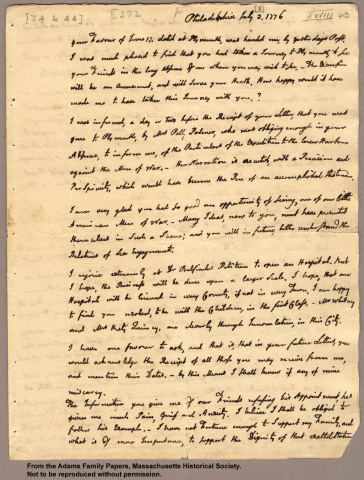
“The Second Day of July 1776, will be the most memorable Epocha, in the History of America. I am apt to believe that it will be celebrated, by succeeding Generations, as the great anniversary Festival. It ought to be commemorated, as the Day of Deliverance by solemn Acts of Devotion to God Almighty. It ought to be solemnized with Pomp and Parade, with Shews, Games, Sports, Guns, Bells, Bonfires and Illuminations from one End of this Continent to the other from this Time forward forever more.”

John Adams, Letter to Abigail Adams, July 3, 1776

John Adams, by far the most prescient of the founders, described Independence Day in this letter sent to his wife Abigail on July 3rd, 1776. He got most of it right.

Adams predicted that the anniversary of American independence would be celebrated forever. He expected July 2 to become Independence Day because that was the day Congress approved Virginia’s resolution that the thirteen colonies declare their independence from England. Instead, we celebrate July 4, the date on which the text of the Declaration of Independence was approved and eventually printed with that date. But his description, parades, bells, fireworks (“illuminations”), bonfires, sports, and public celebrations, closely resembles how we celebrate the Fourth of July today.

Adams foresaw the growth of the United States of America to span the continent from west coast to east. And his letter to Abigail captures his confidence that the new nation would endure as a great nation among those of the world.

I often wonder, in this age of divisiveness, if we have fulfilled Adams’s dreams. The United States is unquestionably the world leader in many respects. It has the world’s biggest economy. It has grown dramatically in population. It has expanded to stretch from one ocean to the next. It claims to have the most powerful military, although it doesn’t seem to be able to keep a strait essential to the world’s energy supply open. It certainly outspends the next dozen or so countries on that military. Adams foresaw those things and I think on those points the United States today would please him.

But he would be less pleased to discover that his biggest fears have also come to pass. He wrote of the dangers facing the new republic. His biggest fear came not from without, but from within. He warned that avarice could produce leaders who put personal gain over the needs of the people. He predicted that under certain circumstances, factions succumbing to greed for power and money could infect multiple branches of government and defeat the system of checks and balances the framers wrote into the Constitution in 1787. I do not believe he would be pleased with the current state of affairs in Washington.

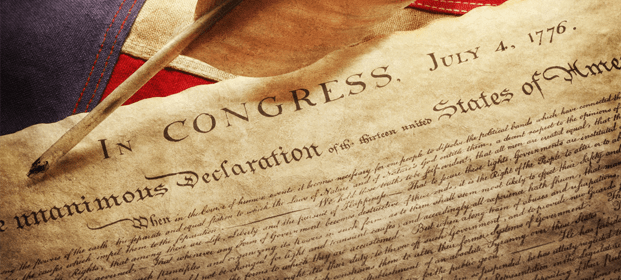
The Declaration was always a contradiction. It famously contains what the great biographer Walter Isaacson calls, “The Greatest Sentence Ever Written.” Yet the author of, ““We hold these truths to be self-evident, that all men are created equal, that they are endowed by their Creator with certain unalienable Rights, that among these are Life, Liberty, and the pursuit of Happiness,” Thomas Jefferson, was a slaveholder throughout his entire life, as were many of the Revolutionary era leaders.

Jefferson listed slavery as one of the evils brought to the new world by the King of England. But that sentence was removed from the Declaration during the final debate. Jefferson later wrote it was the price for gaining the acquiesce of South Carolina and Georgia to the independence resolution.

Slavery wasn’t abolished until the 13th Amendment was ratified in 1865, after the Civil War. Voting rights for women didn’t arrive until the 20th century, with ratification of the 19th Amendment in 1920.

Many people believe the nation should work toward unity, the assimilation of the various immigrant groups which have arrived on our shores in waves over the years. This is what I call the “great melting pot” strategy. This may be the answer in other countries, where the population is homogeneous and it is easy to be loyal to a race or a land. The United States has never been that. Unless you can trace your lineage to the indigenous people, and only about two per cent of the population can, then you trace your roots to someplace else. We expect immigrants to be loyal to the country, and history proves they are. Yet we retain as important parts of our identity those aspects of heritage which our ancestors brought to these shores.

There is no question that this diversity, a word the present administration sees as obscene, adds to our divisions. But history proves it is also a source of great strength. We should embrace the diversity of our people. We should strive toward tolerance and understanding of fellow Americans who have stories which are different than our own. Our diversity makes it clear that the people who are Americans choose to be Americans. I see in the continuing clamor of people from all over the world to immigrant to the United States evidence that we are doing something right.

For me the obvious contradiction between the words of the Declaration and reality is resolved by viewing the Declaration we celebrate today as aspirational, rather than literal. The document was a statement of profound principles and ideals, rather than a word-for-word reflection of 1776 reality. It remains so to this day as we strive to, in the words of the great preamble to the Constitution, “form a more perfect union.” For me, that gives hope that we can come closer to our goals. Someday.

“You will think me transported with Enthusiasm but I am not.—I am well aware of the Toil and Blood and Treasure, that it will cost Us to maintain this Declaration, and support and defend these States.—Yet through all the Gloom I can see the Rays of ravishing Light and Glory. I can see that the End is more than worth all the Means. And that Posterity will tryumph in that Days Transaction, even altho We should rue it, which I trust in God We shall not.”

John Adams. 1776

Do we see on the occasion of our 250th birthday John’s rays of ravishing light and glory?

Do we agree with Adams, that the end is more than worth all the trials and tribulations, the blood and the treasure? That the end is more than worth all the means?

It’s up to us now. And to the generations to come.

Happy Birthday America.

####

Poof! It’s Gone. Maybe.

We think Donald Trump‘s name has been removed from the John F. Kennedy Center for the Performing Arts. At least, that what Trump’s handpicked board of directors told the District Court for the District of Columbia in a filing on Saturday. The removal had been ordered by the court two weeks earlier in a decision enforcing the Center’s original statutory name.

Trump’s name was added in December 2025 after he replaced the Kennedy Center’s leadership and the new board voted to rename the institution. The court found this action illegal, ruling that the board cannot unilaterally change the name of a national memorial.

In his 94-page decision, U.S. District Judge Christopher Cooper wrote, “The Kennedy Center’s organic statute makes crystal clear that the Center is to be named for President Kennedy, and it cannot bear any other formal name or public memorial based on the Board’s unilateral say-so. Congress gave the Kennedy Center its name, and only Congress can change it.”

The renaming triggered a large outcry and a boycott of the Center by patrons, performers, and donors. A crowd of several hundred people gathered on Saturday at the Center to witness the removal of Trump’s name from the exterior. Which brings us to my use of the word “maybe.”

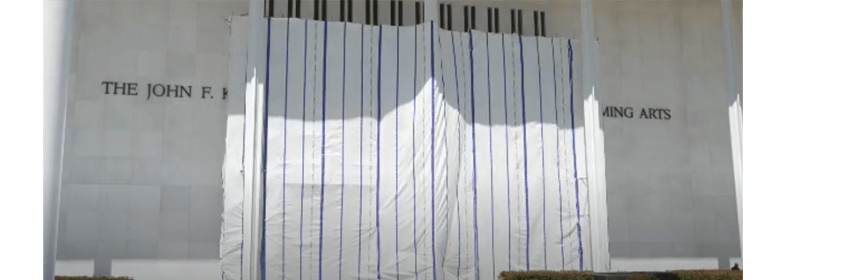
While the Trump lettering was put up by workers on simple lifts, workers Saturday first erected an expansive scaffold in front of the lettering. Then they draped a large curtain or tarp to prevent people from watching their work. Several web cams had been pointed on the sign, transmitting the image around the world. The curtain remains up on Sunday morning. We have only the sworn statement of Trump’s board of directors that the name has been removed.

Why is the curtain still up? Perhaps Trump just couldn’t stand to see the empty space his name once filled. And didn’t want to watch his name coming down.

This is not the end of the lawsuit, which had been brought by Rep. Joyce Beatty (D-Ohio), an ex officio trustee who sued her fellow trustees for adding Trump’s name to the title of the Kennedy Center. Hours before Friday’s deadline, two courts denied the Kennedy Center’s last-ditch attempt to delay the removal, even as crews erected scaffolding next to the building.

Judge Cooper ruled at 1 p.m. that the Kennedy Center’s lawyers failed to demonstrate they were likely to win their appeal or that the center would suffer “irreparable harm” if Trump’s name were removed. At 3:46 p.m., Justice Department lawyers representing the center appealed Cooper’s denial, filing an emergency motion for a stay with the Court of Appeals for the D.C. Circuit. Shortly after 7 p.m., the appeals court denied the second attempt. But the appeal will continue.

The addition of Trump’s name sparked immediate backlash from the arts community and members of the Kennedy family, who argued that the renaming desecrated a living memorial to the assassinated president. Congress established the center in 1964, two months after Kennedy’s death, designating it “the sole national monument to his memory within the city of Washington and its environs.”

Trump’s Department of Justice, paid for by taxpayers, represents him in these cases.

Last week the Center was also sued by the Washington National Opera. The WNO performed in the Center for fifty years but decamped when Trump took over. The opera claims the Center is refusing to return more than $17 million dollars of endowment contributions, gifts and donations which it managed on behalf of the WNO.

June 16 Update

Official word from The Kennedy Center is that the tarps will stay up for the “two-year renovation” and “replacement” of the marble facade slabs. Trumpian subtext, “OK, my name may be removed, but I’m not going to let you see it!!!! Na Na Na Na-Na.” And make no mistake about it, Trump is still the Chairman of The Kennedy Center, and his “Board” are 100% partisan sycophants.  The Kennedy Center is still in mortal danger.

####

Trump Meets the Press

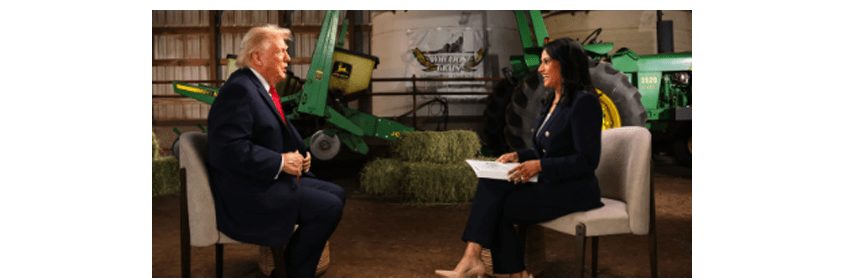
This goes on my list of most memorable television interviews. And I have seen many.

Donald Trump sat for an interview with Kristen Welker, host of NBC’s Meet the Press. I have no idea why. Welker announced that she and her crew had been invited to follow Trump to a rally in Wisconsin, where Trump addressed farmers, one of his most supportive constituent groups. Why they continue to overwhelmingly support him is something else I don’t understand. His policies have crippled their export markets and put them on government subsidies, welfare, and threatened their livelihood. Still, he found himself addressing a friendly crowd. Then he sat down with Welker in a barn in the midst of a pouring rainstorm. As the interviewed progressed, the storm moved inside.

Read more

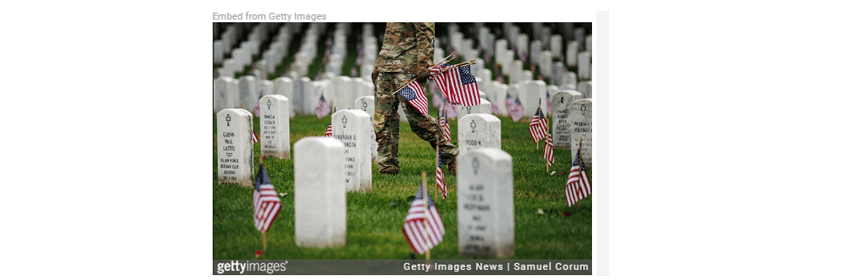
Memorial Day

Memorial Day is a day for reflection. The day honors the men and women who died while serving in the U.S. military. Observed every year on the last Monday of May, Memorial Day was originally called Decoration Day in a nod to the tradition of placing flowers or other decorative displays at gravesites.

Read more

What Would Tom Say?

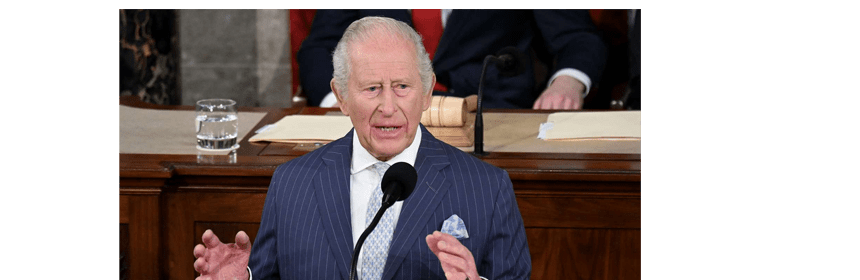
What Would Tom Say? That’s the question running through my mind as I watched Charles III, King of Great Britain and Ireland and lots of other places, address a joint session of the Congress of the United States of America.

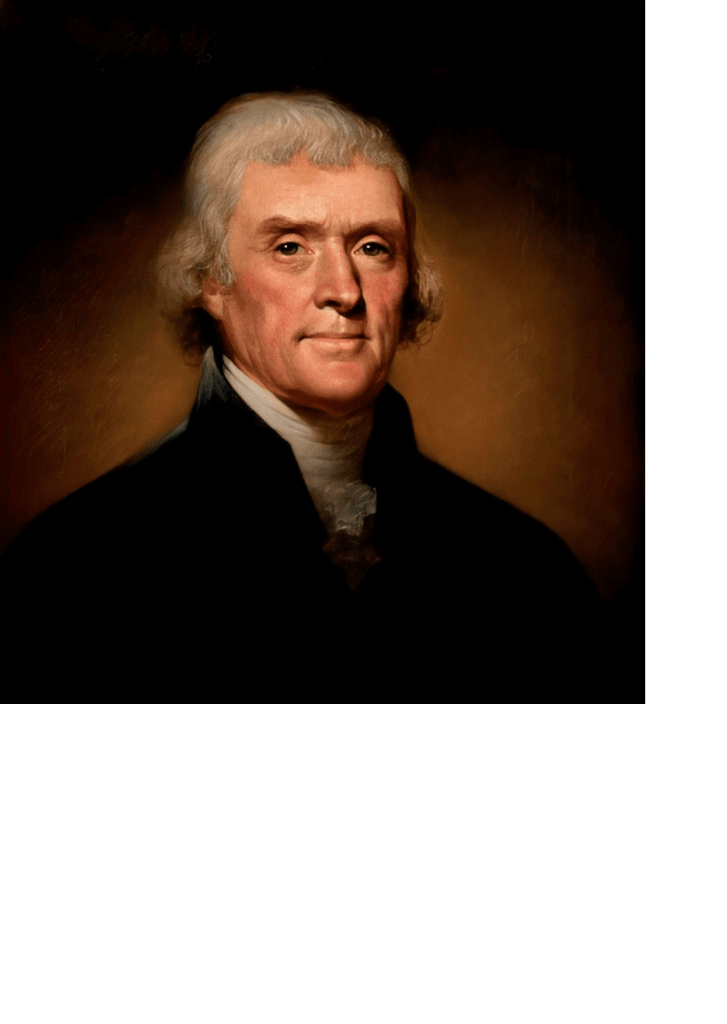
Tom is Thomas Jefferson, founding father, first Secretary of State, third President, and principal author of the Declaration of Independence from Great Britain by the thirteen colonies henceforth to be known as the United States of America.

In the Declaration, written 250 years ago, Jefferson accuses Britain’s then King George III of being a tyrant, “unfit to be the ruler of a free people.”

Read more

Trump the Cruel

When I wrote about the tragic murder of Rob Reiner and his wife Michele Singer Reiner, I noted the tremendous outpouring of sentiment saluting them not only for their contributions to the entertainment industry but also for their role in the community and their humanitarian work. I did mention that there was one notable dissent, and said I’d talk about it in the future.

I did not want to spoil the moment then and in truth I do not want to do so now. The problem is that, as the world is painfully aware, the dissent came from Donald Trump and he, by virtue of the position he holds, cannot be ignored. I resent that he dominates the news. I resent that he takes all the oxygen out of the room. I resent that he is the worst example of a human being I have ever seen. But he can’t be ignored. He must be called out. Rob Reiner would have wanted it that way.

Within hours of the time the news about the Reiners’ killing broke, Trump had put a post on his captive social media platform that was probably the most vicious thing I have ever seen. I asked one of my AI assistants what was the most common adjective being used to describe it and the response was, “cruel,” followed by “inappropriate,” “disrespectful,” “distasteful,” “callous,” “vile,” “incendiary.” and “depraved.” With my apologies, just in case you haven’t seen it yourself, read it and judge for yourself.

Trump’s post itself described Reiner as having a “mind crippling disease known as TRUMP DERANGEMENT SYNDROME” and called him a “deranged person”. 

Trump’s problem with Reiner is that the actor and director was also a progressive activist,  a supporter of Democratic candidates, and an outspoken critic of Trump .  A few hours after the post, Trump told a reporter that Reiner was “a deranged person” who “was very bad for our country.”

In the decade since he announced his presidential campaign by branding immigrants as criminals and rapists, the accepted wisdom about Donald Trump has become that no matter how outrageous are the things he says, he feels no consequences. This time was a little, just a little, different.

Rep. Thomas Massie (R-Ky.) labeled the discourse “inappropriate and disrespectful,” challenging his GOP colleagues to defend it. Rep. Marjorie Taylor Greene (R-Ga.) a former staunch ally, she rebuked the president, stating the deaths were a “family tragedy” that should be met with “empathy,” not politics. Rep. Mike Lawler (R-N.Y.) and Rep. Stephanie Bice (R-Okla.), both condemned the remarks as “wrong,” urging for “sympathy and compassion” instead of political attacks. And conservative commentators including Jenna Ellis (Trump’s former lawyer) and David Urban (former senior adviser) called the remarks “indefensible” and a “horrible example”. 

We are tempted to just throw up our hands and ignore the monster. But Trump didn’t stop with one vile act. Having already turned the Oval Office into a cheap looking gold filigreed imitation of The Palace of Versailles, he added giant ornate gold letters labeling the rooms of the White House, like the signs one sees in the memory section of an assisted living facility, and created a “Presidential Walk of Fame” featuring pictures of past leaders with grossly unflattering images for men he doesn’t like;

Trump has now added to the rogues gallery plaques which offer partisan comments on the past presidents, reflecting his personal perspective. Joe Biden‘s plaque repeats a false claim that the 46th president, a Democrat, took office “as a result of the most corrupt election ever,” when, in fact, he defeated Mr. Trump in 2020 in both the popular vote and the Electoral College. Barack Obama, the nation’s first Black president, is labeled “one of the most divisive political figures in American history.”

Trump also demanded, and was granted, free television time on December 17. Instead of a holiday address, or an announcement of a major event, Trump used 18 minutes for one of his regular rants basically saying everything has been great since he returned to office and anything that isn’t great is the Democrats’ fault. His delivery was so frenetic he had many wondering if he was under the influence of some form of medication.

But Trump’s pièce de résistance for this holiday season has to be the rebranding of the John F. Kennedy Center for the Performing Arts. At the beginning of the year, Trump fired members of the Center’s board, appointed loyal lackeys in their place, and had them “elect” him chairman. He subsequently approved all the performers named winners of the 2025 Kennedy Center Honors, ordered a redesign of award medal which was originally created in 1978 and used ever since, and named himself as host of the award ceremony.

Then came the announcement, from the White House press secretary Karoline Leavitt rather than from Trump’s hand-picked board, that the center will now be known as “The Donald J. Trump and The John F. Kennedy Memorial Center for the Performing Arts.” The vice president of public relations at the Kennedy Center later confirmed the announcement. The center’s web site carried a new logo within hours. The next day, workers were installing new signs on the exterior of the building. Trump said he was honored and surprised by the gesture. That is just more Trump BS. He had been referring to the center as “Trump-Kennedy” for months.

Not that it matters to Trump, but this renaming appears to be illegal. The John F. Kennedy Center for the Performing Arts was established by the John F. Kennedy Center Act, 20 U.S.C. §§ 76h–76s, which outlines its purpose, governance, and operational framework. The law specifies the name, makes the center the only living memorial for President Kennedy within the District of Columbia, and precludes other names, plaques, or other citations. This is just one more example of Trump satisfying his ego by sticking his name where it does not belong. And doing so in defiance of the law.

This is one more item that will find its way into the courts. Or be reversed if and when the people in power are changed by the voters. Hint, hint. Or we can let Kerry Kennedy, niece of John F. Kennedy, and daughter of Robert F. Kennedy (the senior one), take care of it.

A footnote…. The TV ratings for the Kennedy Center Honors program Trump hosted were down 35% compared to last year’s ratings. That is the program’s lowest rating ever.

#####

Rubio’s Woke War

The Secretary of State is considered the senior advisor to the president. Dean of the cabinet. He is fourth in the line of succession to the presidency. The first Secretary of State was none other than Thomas Jefferson.

The current holder of this key office is Marco Rubio, the 72nd secretary. He used to represent Florida in the U.S. Senate from 2011 to 2025 and has long been a prominent figure in Republican politics. You would think his hands were full. His State Department is grappling with major foreign policy challenges like deterring China’s influence in the Western Hemisphere, managing migration pressures from Latin America, the ongoing war between Ukraine and Russia, negotiating peace efforts in the Middle East, and handling military against Venezuela.

But Rubio, or as Donald Trump used to call him, “Little Marco,” has something else on his mind. Fonts. Specifically, the typeface used by America’s diplomats on documents. Rubio has ordered diplomats to stop using the Calibri font and return to the more traditional Times New Roman.

Against the backdrop of all the crisis the nation is facing, the font edict looks less like a matter of professionalism and more like a symbolic skirmish. A way to score points in domestic culture battles while the department wrestles with urgent global crises.

The story behind the memo is made clear when you consider the order reverses a shift by President Joe Biden’s administration to the less formal typeface that Rubio called wasteful, confusing and unbefitting the dignity of US government documents. In other words, if Biden did it, it must be reversed. We already know Trump is obsessed with Biden. Now we know Rubio shares the syndrome.

Experts say Calibri is modern, clean, and screen-friendly, while Times New Roman is traditional, formal, and optimized for dense print text. The choice between them often depends on whether you want readability on digital displays or a classic, authoritative look in print. So, this is a judgment call.

But more telling, the Biden administration’s decision to switch fonts originated in the Diversity, Equity, and Inclusion office. DEI is the number one boogeyman for the Trump administration. The Biden administration had made the switch because Calibri is generally considered to be more accessible for people with reading challenges due to the font’s simpler shapes and wider spacing, which make its letters easier to distinguish.

“Typography shapes how official documents are perceived in terms of cohesion, professionalism and formality,” Rubio said in a cable sent to all US embassies and consulates abroad. In it, he said the 2023 shift to the sans serif Calibri font emerged from misguided diversity, equity and inclusion policies pursued by his predecessor, Antony Blinken.

Anything that helps people with disabilities access government documents is not on the Trump agenda. Since taking over the State Department in January, Rubio has systematically dismantled DEI programs in line with President Donald Trump’s broader instructions to all federal agencies. Rubio has abolished offices and initiatives that had been created to promote and foster diversity and inclusion, including in Washington and at overseas embassies and consulates, and also ended foreign assistance funding for DEI projects abroad.

“Although switching to Calibri was not among the department’s most illegal, immoral, radical or wasteful instances of DEI it was nonetheless cosmetic,” according to Rubio’s cable obtained by the Associated Press and first reported by The New York Times.

Americas can rest easy. The world may be going to hell but at least the nation’s chief foreign policy expert has his fonts under control.

#####

« Older Entries