The world lost one of its greatest space explorers with the passing of James Arthur “Jim” Lovell Jr., who died peacefully on this week at the age of 97. Lovell embodied the spirit of American exploration and the courage to venture into the unknown that defined the golden age of space exploration.
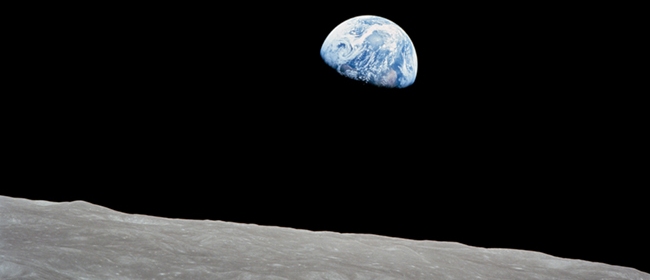
Lovell’s extraordinary career spanned four spaceflights that helped write the early chapters of humans in space. He was among the first three men to leave Earth’s orbit and journey to the moon as command module pilot of Apollo 8 in December 1968, a mission that gave humanity its first close-up view of the lunar surface and the iconic “Earthrise” photograph that forever changed how we see our home planet.
The date will be the most memorable epoch in the history of America. I am apt to believe that it will be celebrated by succeeding generations as the great anniversary festival. It ought to be commemorated as the day of deliverance, by solemn acts of devotion to God Almighty. It ought to be solemnized with pomp and parade, with shows, games, sports, guns, bells, bonfires, and illuminations, from one end of this continent to the other, from this time forward forever more.
That guy could sure write, couldn’t he? John Adams was prescient. He accurately described the way we celebrate Independence Day. He did get the date wrong. He was certain July 2nd would be the date we celebrate. That was the day the Continental Congress passed Virginia’s resolution on independence. July 4th, the day we do celebrate, was the day Congress approved the text of the Declaration of Independence. The document, primarily written by Thomas Jefferson, spelled out the reasons for the thirteen colonies’ separation from England.
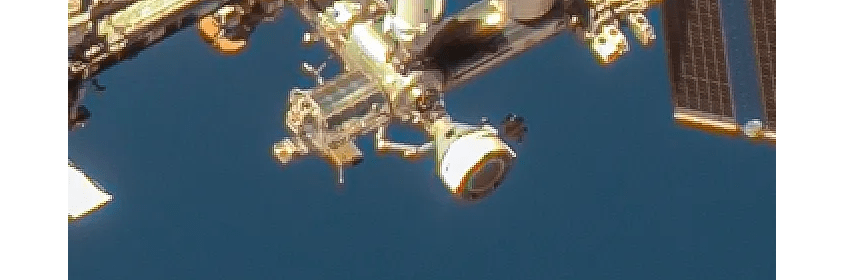
Boeing’s Starliner capsule is seen docked to the International Space Station in this zoomed-in view of an image captured by Maxar Technologies’ WorldView-3 satellite on June 7, 2024. (Image credit: Maxar Technologies via NASA)
Update Sept 7, 2024
The Starliner capsule returned to Earth safely from the International Space Station last night, without the two astronauts it took up there in June. Boeing and NASA engineers will review the vehicle’s performance on reentry as they consider the future of the program.
Two astronauts who flew to the International Space Station on Boeing’s Starliner spacecraft will return to Earth next year on a SpaceX “Crew Dragon” vehicle, their planned eight-day test flight turned into a two-thirds of a year ordeal. It is yet another of a long list of failures by the once venerated aerospace company in recent years.
There is a cliche that says a picture is worth a thousand words. The picture above has generated millions of words, I’m sure. Some believe this photograph, known as “Earthrise,” is the most famous and influential photograph ever taken. It is certainly one of my favorites.
Right on the money. Just as planned, NASA’s OSIRIS-REx satellite dropped its sample capsule on the Utah desert where it was quickly recovered. It should contain a sample taken from the asteroid Bennu.
The NASA recovery teamtook the sample container from the OSIRIS-REx satellite to a temporary clean room on the Department of Defense’s Utah Test and Training Range.
The clean room was set up specifically for this purpose and was ready to receive the capsule. The sample container was secured and the area around it was deemed safe before the recovery process began. The team placed the 100-pound capsule into a metal cradle and wrapped it in multiple sheets of Teflon and then a tarp. The capsule was then wrapped in a harness and secured to one end of a 100-foot cable hanging from a helicopter. The helicopter transported the capsule to the temporary clean room on base.
In the clean room, the capsule will be disassembled and packaged in parts for transport to NASA’s Johnson Space Center in Houston, its permanent home. Scientists will analyze the rocks and soil from the sample for the next two years at a dedicated clean room inside Johnson Space Center. The sample will also be divided up and sent to laboratories around the globe, including OSIRIS-REx mission partners at the Canadian Space Agency and Japanese Aerospace Exploration Agency.
On Sunday September 24, 2023, just before noon eastern time, a sample capsule containing about one pound of the asteroid Bennu should arrive in Utah. Go ahead. Back up. Read it again. Amidst all the angst of our everyday lives, which is the usual subject of this column, we have a wonder like that to contemplate.
The capsule will have come from the OSIRIS-REx spacecraft. OSIRIS-REx was launched on September 8, 2016, flew past Earth on September 22, 2017, and rendezvoused with Bennu on December 3, 2018. It spent the next two years analyzing the surface to find a suitable site for landing.
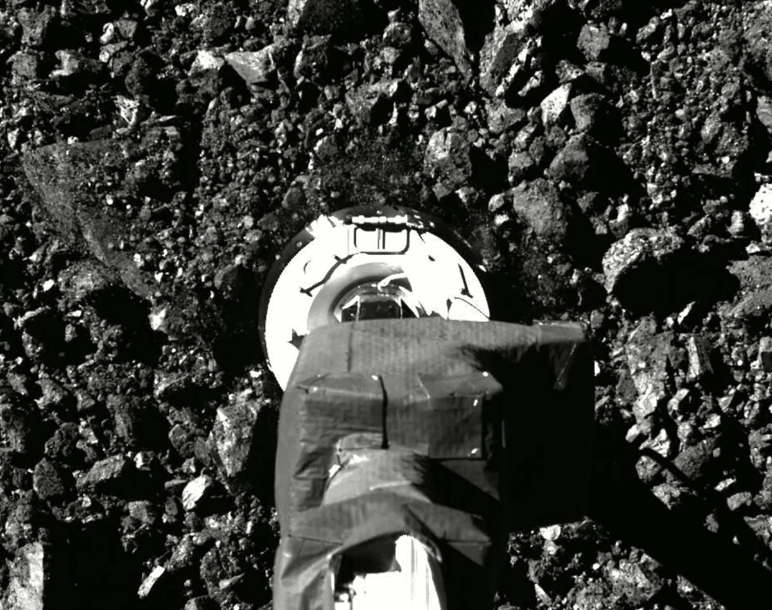
On October 20, 2020, OSIRIS-REx touched down on Bennu and successfully collected a sample. Though some of the sample escaped when the flap that should have closed the sampler head was jammed open by larger rocks, NASA is confident that they were able to retain between 400 g and over 1 kg of sample material, more than the 60 g (2.1 oz) minimum for success.
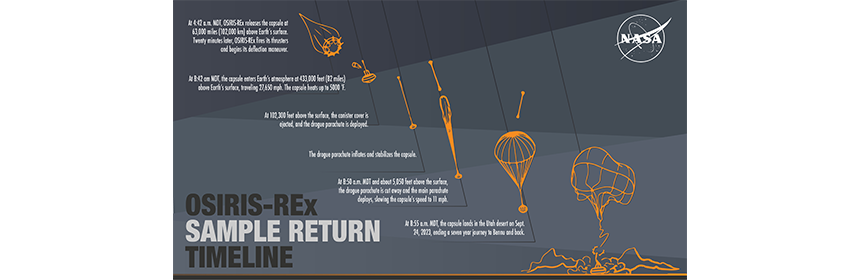
The sample capsule will be released when the spacecraft reaches an altitude of 63,000 miles above the Earth’s surface. The capsule will then be sent spinning towards the atmosphere below and will pierce Earth’s atmosphere at 10:42 a.m. EDT, coming to rest near a military base in the Utah desert. A recovery team will board four helicopters and head out into the desert to retrieve the capsule as quickly as possible to avoid contaminating the sample with Earth’s environment. Once located and packaged for travel, the capsule will be flown via helicopter to a temporary clean room on the military range, where it will undergo initial processing and disassembly in preparation for its journey by aircraft to NASA’s Johnson Space Center in Houston, where the sample will be documented and distributed for analysis to scientists worldwide.
There have been previous missions that have returned samples from outer space to Earth. Between 1969 and 1971, the Apollo program carried out six missions to the surface of the moon. The astronauts brought back a total of 842 pounds of lunar rocks, core samples, pebbles, sand, and dust from the lunar surface.
NASA’s Stardust mission, launched in 1999, flew past the comet Wild 2, collecting thousands of dust particles from the comet’s coma and returning them to Earth for laboratory analysis. Japan’s Hayabusa, launched in 2003, successfully returned samples from the asteroid 25143 Itokawa in 2010. Japan’s Hayabusa 2 returned samples from asteroid 162173 Ryugu in 2020.
If successful, OSIRIS-REx will be the first United States spacecraft to return samples from an asteroid.
All these missions have significantly contributed to our understanding of asteroids and the early solar system. The samples returned by these missions provide valuable insights into the composition, structure, and history of asteroids, as well as clues about the formation of our solar system and the origins of life on Earth.
Bennu was chosen as the target of this study because it is a “time capsule” from the birth of the Solar System. Bennu has a very dark surface and is classified as a B-type asteroid, a sub-type of the carbonaceous C-type asteroids. Such asteroids are considered primitive, having undergone little geological change from their time of formation. In particular, Bennu was selected because of the availability of pristine carbonaceous material, a key element in organic molecules necessary for life as well as representative of matter from before the formation of Earth. Organic molecules, such as amino acids, have previously been found in meteorite and comet samples, indicating that some ingredients necessary for life can be naturally synthesized in outer space.
Which doesn’t mean we will find a place we can relocate to in our neighborhood any time soon.






 Scott Gurvey's Public Offerings