Right on the money. Just as planned, NASA’s OSIRIS-REx satellite dropped its sample capsule on the Utah desert where it was quickly recovered. It should contain a sample taken from the asteroid Bennu.
The NASA recovery teamtook the sample container from the OSIRIS-REx satellite to a temporary clean room on the Department of Defense’s Utah Test and Training Range.
The clean room was set up specifically for this purpose and was ready to receive the capsule. The sample container was secured and the area around it was deemed safe before the recovery process began. The team placed the 100-pound capsule into a metal cradle and wrapped it in multiple sheets of Teflon and then a tarp. The capsule was then wrapped in a harness and secured to one end of a 100-foot cable hanging from a helicopter. The helicopter transported the capsule to the temporary clean room on base.
In the clean room, the capsule will be disassembled and packaged in parts for transport to NASA’s Johnson Space Center in Houston, its permanent home. Scientists will analyze the rocks and soil from the sample for the next two years at a dedicated clean room inside Johnson Space Center. The sample will also be divided up and sent to laboratories around the globe, including OSIRIS-REx mission partners at the Canadian Space Agency and Japanese Aerospace Exploration Agency.
On Sunday September 24, 2023, just before noon eastern time, a sample capsule containing about one pound of the asteroid Bennu should arrive in Utah. Go ahead. Back up. Read it again. Amidst all the angst of our everyday lives, which is the usual subject of this column, we have a wonder like that to contemplate.
The capsule will have come from the OSIRIS-REx spacecraft. OSIRIS-REx was launched on September 8, 2016, flew past Earth on September 22, 2017, and rendezvoused with Bennu on December 3, 2018. It spent the next two years analyzing the surface to find a suitable site for landing.
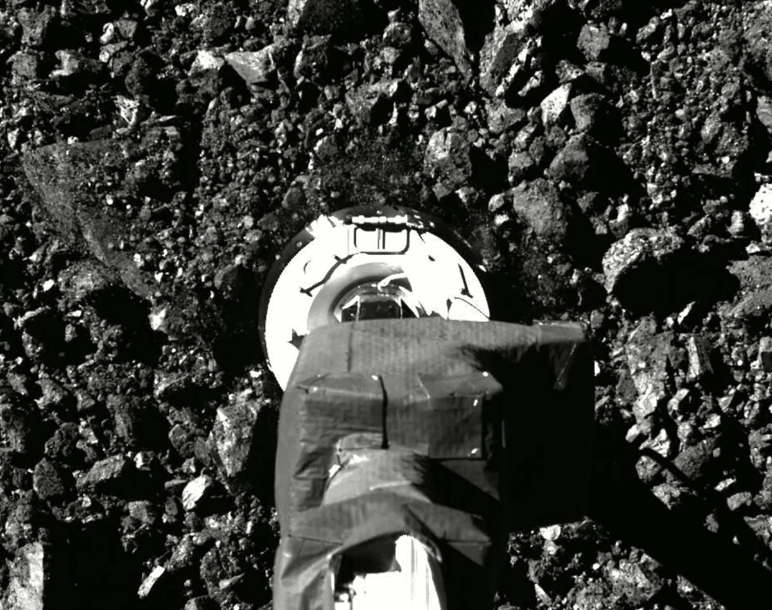
On October 20, 2020, OSIRIS-REx touched down on Bennu and successfully collected a sample. Though some of the sample escaped when the flap that should have closed the sampler head was jammed open by larger rocks, NASA is confident that they were able to retain between 400 g and over 1 kg of sample material, more than the 60 g (2.1 oz) minimum for success.
The sample capsule will be released when the spacecraft reaches an altitude of 63,000 miles above the Earth’s surface. The capsule will then be sent spinning towards the atmosphere below and will pierce Earth’s atmosphere at 10:42 a.m. EDT, coming to rest near a military base in the Utah desert. A recovery team will board four helicopters and head out into the desert to retrieve the capsule as quickly as possible to avoid contaminating the sample with Earth’s environment. Once located and packaged for travel, the capsule will be flown via helicopter to a temporary clean room on the military range, where it will undergo initial processing and disassembly in preparation for its journey by aircraft to NASA’s Johnson Space Center in Houston, where the sample will be documented and distributed for analysis to scientists worldwide.
There have been previous missions that have returned samples from outer space to Earth. Between 1969 and 1971, the Apollo program carried out six missions to the surface of the moon. The astronauts brought back a total of 842 pounds of lunar rocks, core samples, pebbles, sand, and dust from the lunar surface.
NASA’s Stardust mission, launched in 1999, flew past the comet Wild 2, collecting thousands of dust particles from the comet’s coma and returning them to Earth for laboratory analysis. Japan’s Hayabusa, launched in 2003, successfully returned samples from the asteroid 25143 Itokawa in 2010. Japan’s Hayabusa 2 returned samples from asteroid 162173 Ryugu in 2020.
If successful, OSIRIS-REx will be the first United States spacecraft to return samples from an asteroid.
All these missions have significantly contributed to our understanding of asteroids and the early solar system. The samples returned by these missions provide valuable insights into the composition, structure, and history of asteroids, as well as clues about the formation of our solar system and the origins of life on Earth.
Bennu was chosen as the target of this study because it is a “time capsule” from the birth of the Solar System. Bennu has a very dark surface and is classified as a B-type asteroid, a sub-type of the carbonaceous C-type asteroids. Such asteroids are considered primitive, having undergone little geological change from their time of formation. In particular, Bennu was selected because of the availability of pristine carbonaceous material, a key element in organic molecules necessary for life as well as representative of matter from before the formation of Earth. Organic molecules, such as amino acids, have previously been found in meteorite and comet samples, indicating that some ingredients necessary for life can be naturally synthesized in outer space.
Which doesn’t mean we will find a place we can relocate to in our neighborhood any time soon.
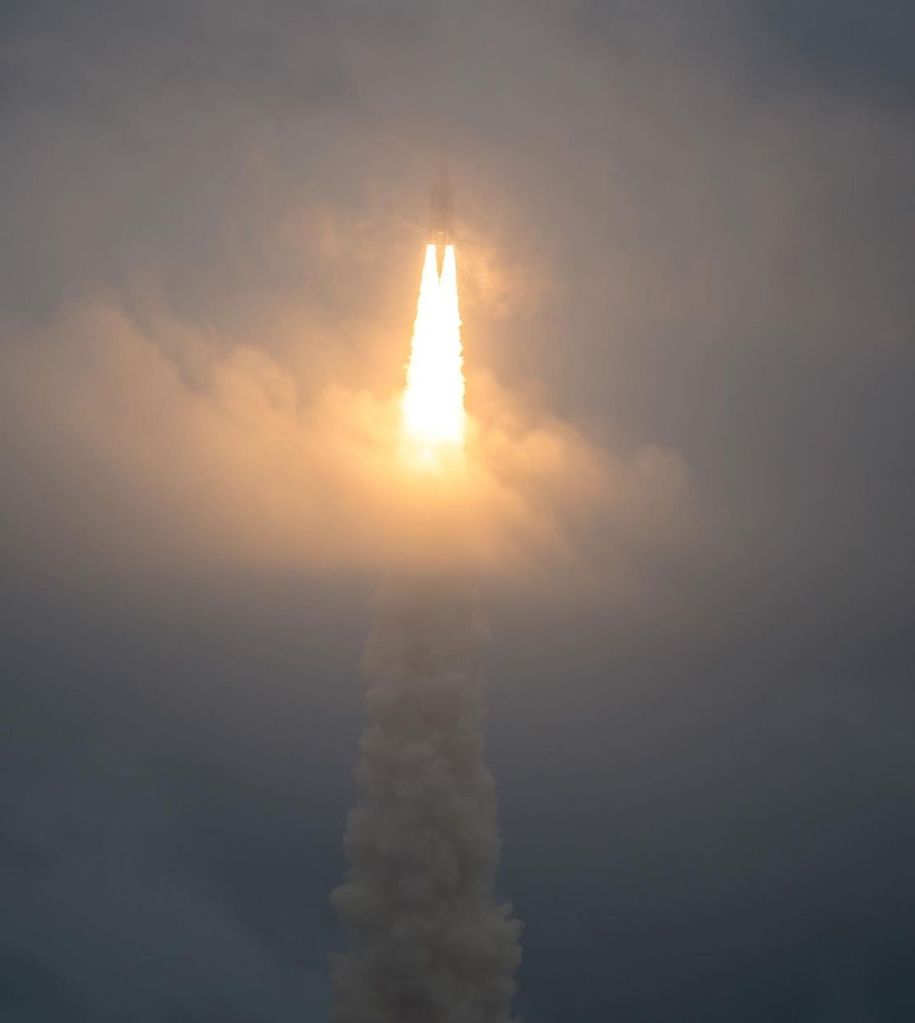
Thirty years. Ten billion dollars. Launching on Christmas morning, the Webb telescope is finally off the earth and on its way to a point in space one million miles away where it will point its eighteen gold-plated mirrors into deep space, hoping to look back in time to the beginning of the universe. The Webb is far more sensitive, especially at the low infrared radiation frequencies than the Hubble Space Telescope. It is hoped it will succeed and surpass that amazing instrument to study the formation of the universe and the most distant worlds. It will take about six months to maneuver into position and be calibrated, ready for its first observations. Bon Voyage Webb.
NASA’s Ingenuity Mars Helicopter has a new mission. Having proven that powered, controlled flight is possible on the Red Planet, the Ingenuity experiment will soon embark on a new operations demonstration phase, exploring how aerial scouting and other functions could benefit future exploration of Mars and other worlds.
So “Ginny,” her primary proof of concept mission over, will serve as a scout for “Percy,” flying ahead of the rover to survey locations Perseverance will investigate in its search for life on Mars. It will also help mission planners plot the best routes for Percy to follow. She’ll fly ahead and land and wait for the rover to catch up. That’s Teamwork.
Crew-2
NASA TV/4-24-2021
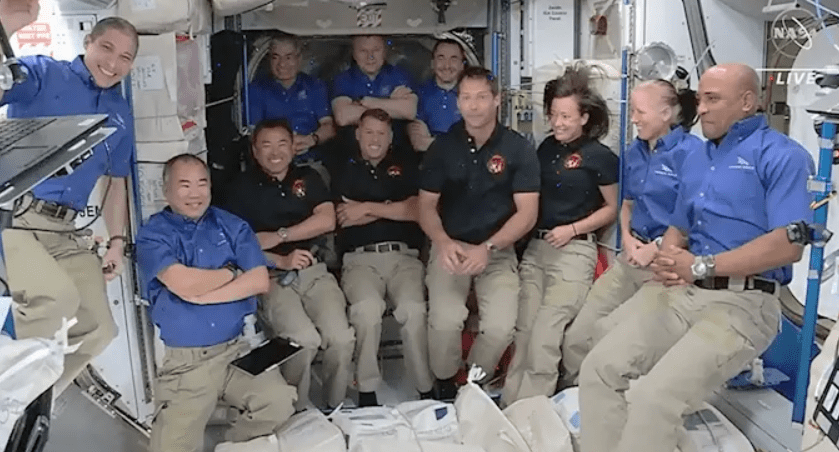
It got crowded on the International Space Station with the arrival of “Crew-2,” SpaceX’s second regular and third actual flight taking humans to the ISS (there was a test mission known as “Demo-2”). There hadn’t been eleven people on board since the Space Shuttle era.
There were other milestones as well. This was SpaceX’s first reused crew capsule to reach the orbiting platform and the first crewed mission with a reused Falcon 9 rocket. The Crew-2 astronauts themselves made history when they started boarding. This was the first time SpaceX had carried passengers from three different agencies (NASA, ESA and JAXA).
Crew-1
NASA TV/5-2-2021
The overcrowding on the ISS came to an end just a few days later with the spectacular nighttime landing of SpaceX’s Crew-1 “Resilience” capsule with four astronauts on board. They landed in the gulf of Mexico just before 3am Eastern Time. But with cameras tuned for night the scene was clearly visible in spite of the pitch dark ocean lighting.
Crew Dragon Resilience will add to its time in space on its next mission launching the privately-funded Inspiration4 crew on a multi-day Earth orbit mission targeted for September.
A team of very smart humans flew a helicopter by remote control off the surface of Mars on April 19, 2021. It is easier to type that sentence than it is to truly appreciate the accomplishment.
The Mars Helicopter, named Ingenuity, weighs just four pounds. It is a proof of concept demonstration. That means it’s mission is just to prove that it works. It did. And it was the first time humans have achieved powered and controlled flight on another planet.
In the middle of this challenging time of pandemic and politics, a group of dedicated scientists on February 18, 2021 landed a car-sized rover designed to explore the crater Jezero on the surface of Mars. The picture above might look like one of NASA’s animations depicting the event. But it is not. The picture is real, taken by the HiRISE high resolution camera on the Mars Reconnaissance Orbiter, which has been circling the planet since March 10, 2006. The photo clearly shows the rover, named Perseverance, beneath its huge parachute. To take this photo, the crew directing the Orbiter had to calculate in advance the precise timing and position so they could instruct the Orbiter to aim its camera and catch Perseverance in flight.
The Entry, Descent and Landing phase of the mission is nicknamed the “seven minutes of terror.” It started when Perseverance entered the thin Mars atmosphere, travelling at almost 12,500 miles per hour. It ended seven minutes later when the rover, executing a Rube Goldberg machine-like series of maneuvers, touched down at a speed of less than two miles per hour. Anything faster and Perseverance would have been shattered into a collection of worthless parts spread across the Martian surface.








 Scott Gurvey's Public Offerings