Warnock, Geschke, and Adobe

I was sorry to hear about the recent passing of John Warnock. I have a feeling many of you do not recognize that name. Nor will you recognize the name Charles Geschke, who was Warnock’s business partner and who died in 2021. But I am quite sure you recognize the name PDF. And the PDF is without question Warnock and Geschke’s greatest invention.

Warnock and Geschke were pioneers of the high-tech computer revolution. Like most successful entrepreneurs, they identified a problem and set out to solve it. Unlike most of the visionaries who made the west coast their home, Warnock and Geschke were quiet, unassuming, and shy.

In the 1990s, even though I was the New York based bureau chief for public television’s Nightly Business Report, I was allowed to travel to San Francisco every December and set up shop for a week at the Fairmont Hotel. We covered an annual Business Week conference titled, “The Digital Economy.” But we also spent a few days visiting the headquarters of Silicon Valley trailblazers and telling their stories.

Almost to a man, and they were almost all men in those days, they were thrilled to sit down in front of our camera to brag about their inventions. Warnock and Geschke were exceptions. They were happy to welcome us to the San Jose headquarters of Adobe, the company they founded in 1982. But they wanted us to interview their employees, the developers and product managers. It took a lot of persuasion to get the two founders in front of our camera. That was rare then and it remains rare today.

Warnock and Geschke met while working at the Palo Alto Research Center of Xerox, now part of SRI International. At Xerox PARC they developed a page-description language, something designers would use to instruct Xerox’s new laser printers how to draw a page. In those days virtually every different model of printer responded to a separate set of drawing commands. Warnock and Geschke’s vision was to create a standard every printer could follow. Xerox did not agree and kept their invention for use on Xerox equipment only.

So, the two left Xerox, started their own company, and created a new language which they called Postscript. A revolutionary breakthrough in printing technology, PostScript was the first printing software that enabled users to print pages that included text, line art and digitized photos. Adobe let all content creators use Postscript without a licensing fee. But they designed, and sold to the printer manufacturers, the circuits which interpreted Postscript and generated the signals the printer needed to generate the page. Apple and the Apple LaserWriter were the first company and product to use the system. With this, modern desktop publishing and word processing programs were born. By 1987, Adobe’s PostScript had become the industry-standard printer language.

Adobe did not stop there. Adobe Illustrator was released in 1987. Photoshop in 1990. The PDF came in 1993. The Portable Document Format was designed to allow the exchange of electronic versions of pages regardless of the software or device which created them or the printer or display which regenerated them without compromising the original. As Adobe’s Senior Vice President of Cloud Technology, Bob Wulff, describes it, “PDF allows the user to view a file precisely—down to the pixel, essentially, of what the author had intended.”

Today the PDF is ubiquitous:

  • PDF has become the standard file format for sharing documents. Businesses, schools, governments, and individuals use it all over the world.
  • PDF is also used to create electronic books.
  • PDF is a secure file format, which makes it ideal for sharing sensitive documents.
  • PDF is easy to use and can be viewed on any device.
  • PDF has had a major impact on the way we work and collaborate. It has made it possible for people to share documents more easily and securely.

Warnock and Geschke are gone now. But Adobe’s legacy of innovation continues. It has, for example, been actively applying artificial intelligence techniques throughout its product line. That is a story for another time. And it has revolutionized its business model. Most of its products are now in a bundle, Adobe Creative Cloud, for which Adobe charges a monthly subscription. Other companies are adopting variants of this model, known as Software as a Service.

By the way, Warnock and Geschke may have been camera shy, but once I got them to agree they produced a great interview. It almost always turned out that way when I had a reluctant subject. I checked in with both men every now and then over the years. They were pioneers of the computer age. Think about them when you print on your laser printer. They will be remembered.

#####


The Mug and the Eight Dwarfs

Donald Trump had already been processed on three criminal indictments. But in each of those he was treated with unusual care, avoiding the mug shot usually taken for anyone arrested on criminal charges. That distinction ended with the fourth indictment. Fulton County, Georgia did not give Trump an exemption from its normal process. Trump now has a mug shot, and a number, P01135809. America now has its own Jean Valjean.

The mug shot on the left above speaks for itself. I don’t understand what message Trump is trying to convey with that scowl. Perhaps you do. The photo has been distributed widely by Trump’s campaign and it is being used on coffee mugs, shirts, and hats sold to raise funds. In just a few days, more than seven million dollars has reportedly been raised. There are many reports that a large amount of these “campaign contributions” are being used to pay Trump’s legal expenses. The quote often associated with P.T. Barnum was right. There is a sucker born every minute.

 In his booking record, Trump states that he is 6-foot-3 and weighs 215 pounds, almost 30 pounds lighter than his White House physical in June 2020. This has prompted a lengthy list of joking comparisons on the Internet showing various sports figures with similar measurements. We are easily amused these days.

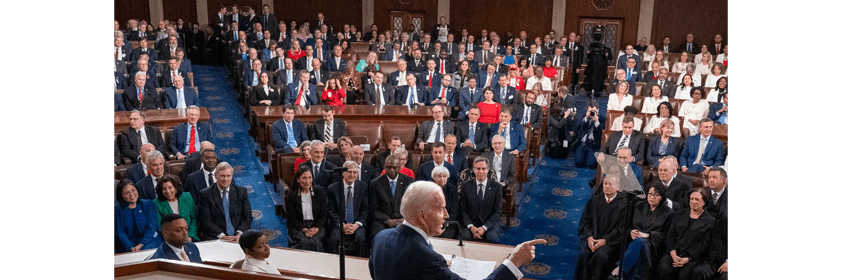
Trump’s latest arrest came the day after eight of his so-called challengers for the Republican nomination for president in 2024 met for a so-called debate in Milwaukee. The Fox channel entertainment, which Trump skipped, had little of substance beyond the moment when six of the eight raised their hands and promised to support Trump if he was the nominee of the part even if he was a convicted felon at the time of the election. You had to be there. See the other picture above.

It is amazing that the party of Lincoln has reached this point. It is really the party of Trump now, and little else. Republicans defended Trump when he paid hush money to a porn star. They defended him when he withheld weapons for Ukraine for political reasons. They defended him after he led a coup attempt against our democracy. They defended him after he removed top secret classified documents, stored them in the bathroom, and repeatedly lied to the authorities about it. They defended him after he pressured Georgia officials to overturn the election results in the state.

The Republican party I grew up with is long gone, dissenters Chris Christie and Asa Hutchinson notwithstanding. According to a survey conducted Aug. 24, 58% of potential Republican primary voters back Trump for the GOP’s 2024 nomination.

With that statistic it seems a waste of time to talk much about this TV event. Hosts Bret Baier and Martha MacCallum, who play journalists on various Fox channels, rarely mentioned Trump during the session. They opened with a question about a song on the Billboard Hot 100 list.

Eventually, prior to November 2024, I’ll get around to explaining inflation, the issue of most concern to American voters. This is where incumbent President Joe Biden is most vulnerable. Yet it was of little concern to the eight would-be challengers or the hosts.

Addressing a soft-ball question on inflation Ron DeSantis rambled something about fighting inflation by firing Anthony Fauci. Fauci, who was director of the National Insitute of Allergy and Infectious Diseases and a leading advisor to the president on Covid, retired from public service in 2022. He also had nothing to do with inflation. This answer was par for the course for DeSantis, who refused to answer questions directly, always offering some canned talking point without substance.

Vivek Ramaswamy introduced himself by stealing a line from Barack Obama’s first presidential debate in April 2007. The thirty-eight-year-old Ramaswamy made a fortune in finance, pharmaceuticals, and biotech. He calls climate change a hoax and promotes fossil fuel as the secret to economic success. Ramaswamy wants to raise the voting age to twenty-five. He’s also called for voters to pass a civics test. “The U.S. Constitution,” Ramaswamy says, “is the strongest guarantor of freedom in human history. That is what won us the American Revolution.”

The Revolution ended with the signing of the Treaty of Paris on September 3, 1783. The Constitution was signed in 1787. It went into effect after the nineth state ratified it on March 4, 1789. Ramaswamy would flunk his own test.

Mike Pence declared himself to be his own man, defending his decision to not commit treason by illegally invalidating the election of Joe Biden to be President on January 6, 2021. Pence repeatedly says Trump is not fit to be president. But he raised his hand and promised to support Trump if he is the Republican nominee in 2024. Go figure. Pence also pushes a national ban on abortion as a divinely inspired mission affirming the sanctity of life. Pence is also a staunch supporter of the death penalty. Go figure.

Men wouldn’t vote for Hillary Clinton. Will Republicans vote for Nikki Haley? Can any woman be elected president? Seems like an uphill battle for 2024. Haley surprised me by blaming Republicans in Congress for spending too much. She also was the best at exposing Ramaswamy’s uninformed positions on Ukraine and foreign affairs. She was the U.S. Ambassador to the United Nations under Trump, a president who hated the United Nations.

Was Tim Scott really there? I got that he grew up in a single-parent household. And that’s all I got.

Doug Burgum is the current governor of North Dakota. North Dakota is a state that never should have been created in the first place. If you add the populations of North Dakota and South Dakota together you will still have a state where nobody lives. Burgum thinks small-town values can solve everything from crime to foreign affairs. He doesn’t appear to have enough to do at home.

The former governor of Arkansas Asa Hutchinson seems like a nice guy. He’s an anti-Trumper but beyond that there’s no there there. He does want to cut the number of government workers. At least he didn’t endorse the DeSantis plan to “start slitting their throats on day one.”

And finally, there’s Chris Christie. He’s fun and entertaining. He attacked Trump like no one else dared and withstood the anger of the pro Trump crowd. He doesn’t have a chance.

#####

Georgia’s Turn

Oh, I tried. I tried to write about the horrible fire in Maui. I tried to write about elite universities. I tried to write about artificial intelligence. And I tried to write about the ongoing strike of writers and actors in Hollywood.

But before I could publish, it happened again. Donald Trump. Back to the top of page one. Unavoidable.

Donald Trump and eighteen others were indicted in Georgia on Monday over their efforts to overturn his 2020 election loss in the state. Prosecutors used a statute normally associated with mobsters to accuse the former president, his lawyers, and other aides of a “criminal enterprise” to keep him in power.


The nearly 100-page indictment details dozens of acts by Trump or his co-indictees to undo his defeat, including asking Georgia’s Republican secretary of state to find enough votes for him to win, harassing an election worker who faced down false claims of fraud, and attempting to persuade Georgia lawmakers to ignore the will of voters and appoint a new slate of electors favorable to Trump.

I’ve said it before, and I’ll say it again. I love sharing with you my opinion, something I was rarely able to do in my many years with CBS, NBC, and PBS where my task was to present the unvarnished facts of events without commentary. But I still try as hard as I can to make sure my opinions are clearly opinions, and my facts are accurate. I also work to provide you with links to primary sources, which I implore you to read for yourselves. I remain shocked at how many Americans can’t be bothered reading documents or watching videos and instead adopt the viewpoint of whatever talking head they favor from whatever cable or internet source provides the echo chamber in which they hear the views they are predisposed to believe without a challenging word to raise doubts or questions.

Please read the indictment, here. And listen to the whole one-hour recording of Trump’s phone call on January 2, 2021, with Georgia Secretary of State Brad Raffensperger, here. Do the work. Then you can decide what it means.

“The indictment alleges that rather than abide by Georgia’s legal process for election challenges, the defendants engaged in a criminal racketeering enterprise to overturn Georgia’s presidential election result,” Fulton County District Attorney Fani Willis, whose office brought the case, said at a late-night news conference. Willis’ investigation stretched over two and a half years.

The Georgia case is significantly different from the two cases previously filed in federal court by Special Counsel Jack Smith. Willis’s expansive detailing of events and use of laws (“RICO“) usually employed to go after mob bosses, will allow Fulton County prosecutors to tell the jury a story of a wide conspiracy to reverse election results in multiple states and build a compelling narrative of Trump’s actions in concert with numerous accomplices. But the logistics of putting Trump on trial along with eighteen other people, each of whom may file pretrial motions, in a racketeering indictment so complex and multilayered could result in many pre-trial motions and delay. Even so, Willis has asked the court to schedule a trial in March.

There are many interesting legal issues raised in this indictment. And whether I like it or not we will probably consider several of them in the months ahead. But first I expect you to do your homework.

For now, some quick observations. Trump’s defense, and those of many of his co-indictees, center around the idea that all he was doing was exercising his first amendment right to speak freely and criticize the election results. Another defense is that Georgia, in this indictment, and the federal government in the two indictments it has filed, is criminalizing conduct which is not criminal.

That’s where the “RICO” business comes in. RICO stands for the “Racketeering Influenced and Corrupt Organizations” Act. It was a groundbreaking piece of legislation passed in the United States in 1970 with the goal of financially crippling the Mafia. The act provides for extended criminal penalties and a civil cause of action for acts performed as part of an ongoing criminal organization. More than thirty states, including Georgia, have passed state RICO statutes based on the federal law.

Willis explained that “overt acts are not necessarily crimes under Georgia law in isolation but are alleged to be acts taken in furtherance of the conspiracy. Many occurred in Georgia, and some occurred in other jurisdictions and are included because the grand jury believes they were part of the illegal effort to overturn the results of Georgia’s 2020 presidential election.”

The Georgia charges have the potential to accomplish something that the federal indictment does not, holding people other than Trump accountable for what happened. The other eighteen defendants, accused of being members of a criminal enterprise, include lawyers, political operatives, state Republican Party officials, and even a Justice Department official. The indictment charges Rudy Giuliani, the former New York mayor who served as Trump’s personal attorney after the election, Mark Meadows, Trump’s White House Chief of Staff, and several other Trump advisers, including lawyers John Eastman, Sidney Powell, Jenna Ellis, and Kenneth Chesebro. Some of these are believed to be unindicted and unnamed co-conspirators in the federal cases.

The Georgia indictment reads like a story, a tale the public should find easy to understand. The recorded telephone call speaks for itself and has been available for the public to hear for more than a year. The indictment specifically accuses Trump with making false statements and writings for a series of claims he made to Raffensperger and other state election officials, including that up to 300,000 ballots “were dropped mysteriously into the rolls” in the 2020 election, that more than 4,500 people voted who weren’t on registration lists and that a Fulton County election worker, Ruby Freeman, was a “professional vote scammer.”

Giuliani, meanwhile, is charged with making false statements for allegedly lying to lawmakers by claiming that more than 96,000 mail-in ballots were counted in Georgia despite there being no record of them having been returned to a county elections office, and that a voting machine in Michigan wrongly recorded 6,000 votes for Biden that were in fact cast for Trump.

Another defendant, Stephen Cliffgard Lee, is alleged to have traveled to Ruby pFreeman’s home “with intent to influence her testimony.” Freeman and her daughter Shaye Moss testified to Congress last year about how Trump and his allies acquired surveillance footage from November 2020 to accuse both women of committing voter fraud, allegations that were quickly debunked yet spread widely across conservative media. Both women, who are Black, faced death threats.

Trump has personally used his social media platform to attack Willis and other prosecutors, describing them as “vicious, horrible people” and “mentally sick.” He has referred to Willis, who is Black, as the “racist DA from Atlanta.” His 2024 campaign included her in a recent video attacking prosecutors investigating Trump. Willis has raised concerns about security as her investigation has progressed, citing Trump’s “alarming” rhetoric and the racist threats she and her staff have received. Trump has also attacked the judges. He may be put on notice at his arraignment that further inflammatory posts could lead to his imprisonment pending trial.

And unlike the federal courts, where cameras are forbidden, the Georgia courts are generally open to cameras and live coverage of the trial in Georgia is likely. That will put the spotlight, usually reserved for Trump, on prosecutors and the legal process. The public proceedings may be just what the country needs.

#####

Knowing When to Leave

UPDATE AUGUST 30, 2023

On August 30, after this column was written, Mitch McConnell froze again. This time he was addressing reporters in his home state of Kentucky. The incident was recorded on video. It is long past time something was done about this problem. Just as the 25th Amendment to the Constitution was added to deal with the possibility of presidential incapacity, something must be done for members of Congress either by amendment or by changes in the House and Senate rules.

As I wrote back on August 13th, both Senators McConnell, a Republican, and Feinstein, a Democrat, should be allowed to retire gracefully now, with provisions made to fill the committee and leadership positions which will become vacant in a way which maintains the partisan balance. What is the purpose of waiting until one or both are carried out of the Capitol on a stretcher, leaving a crippled Senate behind?


Original Post from August 13

Knowing when to leave may be the smartest thing that anyone can learn. No truer words were ever spoken. Or written as a song lyric, in this case by Hal David and set to music by Burt Bacharach for the 1969 musical Promises Promises. It is a lesson few politicians ever learn.

Senate Minority Leader Mitch McConnell suddenly stopped speaking during a weekly Republican leadership news conference on July 26, 2023, appearing to freeze, and then went silent and was walked away. McConnell had been making his opening remarks about an annual defense policy bill when he stopped talking. He was led away from the press conference and towards his office by fellow GOP Sen. John Barrasso. A brief time later, McConnell returned and told reporters that he was “fine.”

It certainly didn’t look fine. It looked frightening. Keep in mind that this is the long serving Senate Republican leader. The man most responsible for decades of right-wing judges being appointed throughout the federal courts. The man who once bragged that his desk was the place liberal legislation passed by a Democratic majority House of Representatives went to die. But while I would cheer if McConnell were defeated in his next election, I do not wish him poor health.

McConnell is not alone. California Senator Dianne Feinstein, a Democrat, is showing obvious signs of cognitive decline, leaving her colleagues in Congress scrambling for ways to work around her. She spent months at home in California reportedly suffering from shingles. She returned to the Senate in a wheelchair, but she has been seen in committee meetings apparently confused as to the state of the proceedings and unsure of her vote. That incident occurred during a meeting of the Appropriations Committee. Feinstein also sits on the Judiciary Committee which considers pending appointments to the federal bench. It is sad to watch.

Feinstein is currently the oldest member of the Senate, at 90 years of age. Republican Senator Chuck Grassley of Iowa will be ninety next month. Grassley is the senior Republican on the Judiciary Committee and has been a key player blocking the appointment of judges he believes are too liberal. Grassley, who won reelection in 2022, has had his share of incoherent moments in public as well. Feinstein has announced she will retire when her term ends at the end of 2024. There have been calls for her to resign now, allowing California Governor Gavin Newsome to name someone to serve the remainder of Feinstein’s term.

The arcane rules of the Senate appear to make it impossible to change committee memberships during any session of Congress without a filibuster proof majority of sixty votes. Republicans have already said they will not cooperate. That would cost Democrats their one vote majority on the Judiciary Committee, which approves the nominations of all federal judges.

Neither McConnell nor Grassley have discussed retirement.

This problem is not limited to members of Congress. Republicans love to attack 80-year-old President Joe Biden, the oldest man to serve in the White House. But Donald Trump, at 77 years, isn’t far behind. And unlike Biden, who regularly rides a bicycle, Trump requires a golf cart on the links and looks like he is one cheeseburger away from a coronary. Neither man is ready to retire.

It takes a special kind of person to put the public interest ahead of their own ambition and, perhaps, vanity. It’s worth considering the cases of Supreme Court Justices Ruth Bader Ginsburg and Stephen Breyer. Justice Ginsburg died in 2020 at the age of eighty-seven, while still serving on the court. While her dedication to the job is admirable, her decision not to retire earlier, despite her age and health issues, she had several surgeries for cancer, changed the balance of power on the Court. The overturning of Roe v. Wade was a direct result.

In contrast, Justice Breyer, who is currently 85 years old, retired in 2022, even though he is apparently in good health. That decision has been praised by many as a wise move, allowing President Biden to appoint a replacement while the Democrats held the Senate majority.

As someone who now has a Medicare card in his pocket, even though I am some distance away from the ages of the people I noted above, I am the last to imply that one should be automatically disqualified from public office, or from doing any job, simply because of age. But we must all make an honest assessment as to our ability to perform in whatever role we undertake. This is certainly most true in the public sector. A public official unable to perform their duties is not doing anyone any good. The key is knowing when to leave.

#####

Trump Threat du jour

(There is an update below)

I really did not want to write about Donald Trump again so soon. I hate the way Trump dominates the news. I hate the way he steals our attention when we should be facing up to our challenges. I hate the way he sucks all the oxygen out of a room when his name is just mentioned. But Trump loves the attention, and he won’t stop attracting it. The danger our democracy faces from Trump is so great it is incumbent on anyone who values truth to speak out.

Trump was arraigned on Thursday, August 3rd, on four federal felony counts arising out of his action to retain his office even though he had lost his bid for reelection. He pled not guilty, and he was allowed to leave on what is known as a personal appearance bond. That bond doesn’t require that a defendant put up any money unless they violate the terms of the release or fail to show up in court.

Read more

The One That Counts

Donald Trump‘s dance card is filling up. Trump has now been indicted by a third grand jury, this time for his actions following the 2020 election. Trump is accused of attempting to stop the peaceful transfer of power and deny the right of American citizens to elect their president. There has never been anything like this in the history of the United States. The outcome will determine what kind of a nation we want to be.

This is the Case that Counts

In a series of investigations, two previous indictments, two impeachments, and several civil lawsuits, Trump has been accused of crimes committed as president and after he left office. The charges range from business fraud to the illegal retention of classified material to the destruction of evidence.

Read more

The Supremes: The Gods Themselves

Supreme Court Building, exterior

Following its tradition of recent years, the Supreme Court of the United States spent the last few weeks of June releasing its most controversial decisions of the term. It then adjourned for its usual three-month vacation. This is the last of a series of posts analyzing those decisions.


As is their habit, the reporters who cover the Supreme Court of the United States wrote summarizing the court’s decisions for the term that ended in of June. Some surprised me in concluding that this term was less traumatic than the last. Those of that view concluded that the Court was mindful of the decline in public respect for the institution that followed the 2022 decision, Dobbs v. Jackson Women’s Health, overturning the fifty-year-old precedent holding that women had the right to control matters of their own reproductive health.

It is true, the decisions of the term just ended avoided the use of the term “overruled” the conservative supermajority applied with such glee in Dobbs. But I see little to cheer in their recent work. They have continued to erode at rights Americans have taken for granted. And they do with without regard for precedent, without deference to the elected branches, and without consideration for the principle that their jurisprudence be as limited as possible. Instead, they have set themselves up as the most powerful branch of government, the final arbiters of the most fundamental elements of our social intercourse. We have entered the age of SCOTUS uber alles.

Read more
« Older Entries Recent Entries »