The Supremes: Affirmative Action
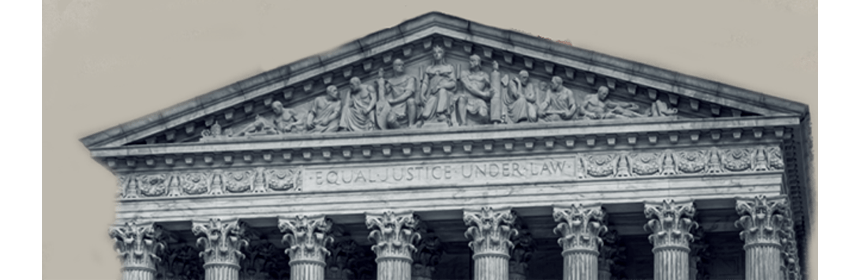

Following its tradition of recent years, the Supreme Court of the United States spent the last few weeks of June releasing its most controversial decisions of the term. It then adjourned for its usual three-month vacation. This is the first of a series of posts analyzing those decisions.
Continuing its steady march back to the 19th Century, the conservative supermajority on the Supreme Court has effectively ended affirmative action on the basis of race in college admissions, a policy used for more than 40 years to make campuses more diverse. The two schools at the center of this decision, Harvard, America’s oldest private university, and the University of North Carolina, the oldest public one, had programs considered the gold standard in affirmative action plans.
Chief Justice John Roberts, writing for the six-judge conservative majority in Students for Fair Admissions v. Harvard, (decided with Students for Fair Admissions, Inc. v. University of North Carolina et al.), said the school’s policies “involved racial stereotyping in a way that violates the Constitution,” specifically, they “violate the Constitution’s guarantee of equal protection of the laws. Justice Clarence Thomas, acknowledging he benefited from affirmative action, shut the door to those who would follow him writing in a concurring opinion that race conscious practices, “fly in the face of our colorblind constitution.”
Justice Sonia Sotomayor, writing in dissent, said the court’s decision, “rolls back decades of precedent and momentous progress in this country.”
The Schools
We are not talking about a lot of schools here. We are talking about a handful where only a small portion of the students who apply are admitted. According to the Pew Research Center, a majority of U.S. colleges admit most students who apply. What we are talking about is the group of ten to twenty schools which admit fewer than 10 percent of applicants. These are the so-called “elite schools” which the conservatives can’t stand. I’ve never understood that because the same schools produce both conservatives and liberals.
Equal Justice
The phrase “Equal Justice Under Law” is inscribed on the front of the Supreme Court Building (see picture above) and is derived from the 14th Amendment which states that no state shall “deny to any person within its jurisdiction the equal protection of the laws” The words have rung mostly hollow in America, especially for the black Americans who could trace their ancestry to the enslaved Africans brought to America beginning in the 17th century.
This is not the place for a course on the history of race relations in the United States. Look at Justice Ketanji Brown Jackson’s brilliant opposition for a detailed review. But there is today a concerted effort by right wing conservatives to hide or minimize the story. I came of age in the 1960s and 1970s when the situation was vastly different. It was the age of protest. Civil rights, women’s rights, the war in Vietnam, Watergate, all red-hot topics in the daily news. Are today’s high school and college students paying any attention to the news?
The activism of those years achieved progressive results. An odd couple coalition of President Lyndon Johnson, a southern Democrat, and Senator Everett Dirksen, a midwestern Republican, produced enough votes to pass laws putting substance into the promise of equal justice, specifically the Civil Rights Act of 1964, and the Voting Rights Act of 1965. These laws promised equality, but not affirmative action to achieve it.
Riots in the mid and late-1960s convinced civil rights leaders that a color-blind policy of enforcing civil rights was not enough and that there had to be steps taken to ensure blacks could achieve equality with whites. President Lyndon Johnson endorsed this view in a speech before Howard University in 1965:
You do not take a person who for years has been hobbled by chains and liberate him, bring him to the starting line and say you are free to compete with all the others.
President Lyndon Johnson, 1965
The Supreme Court first considered, and in a complicated and split (5-4) decision approved, affirmative action in education in Regents of the University of California v. Bakke in 1978. Twenty-five years later, in Grutter v Bollinger in 2003 Justice Sandra Day O’Conner wrote for the court, upholding affirmative action in another 5-4 decision:
It has been 25 years since Justice Powell first approved the use of race to further an interest in student body diversity in the context of public higher education. Since that time, the number of minority applicants with high grades and test scores has indeed increased…. We expect that 25 years from now, the use of racial preferences will no longer be necessary to further the interest approved today.
Grutter v Bollinger, 2003
With Students v Harvard that day has, a few years early, arrived.
What’s Next?
The issue of affirmative action has always been a tricky call. The American people are split on the subject. But there are some things to keep in mind as we move beyond the affirmative action era.
California voters in 1996 approved Proposition 209, which banned affirmative action in college admissions. After Proposition 209 banned UC from considering race in admissions, “freshmen enrollees from underrepresented minority groups dropped precipitously at UC,” the system wrote in the brief it filed to the Supreme Court.
In Students, the Court did not ban all affirmative action. Only affirmative action based on race. Admission preferences for legacies, donors, employee families and special recommendations are still allowed. And of course, special preferences for athletes are always welcome.
While I’ve repeatedly written that Students ends affirmative action on the basis of race in education, Roberts would disagree. The Chief avoided using the words “overruled” with respect to Bakke and Grutter, as Justice Samuel Alito did in last year’s Dobbs decision on abortion.
As the lawyers say, this is a distinction without a difference. In a searing dissent, Sotomayor, joined by the court’s two other liberals, declared the devastating impact of the decision cannot be overstated. Ignoring racial inequality, she said, will not make it disappear.
Roberts wrote, “Eliminating racial discrimination means eliminating all of it.” But the Chief added that some consideration of the racial background of an applicant is still lawful. In application essays, for example, Roberts wrote, “nothing in the opinion should be construed as prohibiting universities from considering an applicant’s discussion of how race affected his or her life, be it through discrimination, inspiration or otherwise.”
I think we will see scores of cases rising through the courts in the years ahead as schools face challenges to whatever they do to try to implement the new Robert’s standard. The courts should give clear and consistent guidance so people can reasonably know how the law will be applied to them. This kind of opinion doesn’t help.
In a footnote, the Court exempts the nation’s military academies from its ruling in light of “the potentially distinct interests” they may present. It is well established that the U.S. military, the first part of the federal government to be desegregated, has provided unique opportunities to black Americans. In filing friend of the court briefs, the military academies argued in favor of affirmative action.
Jackson, retorted, “The Court has come to rest on the bottom-line conclusion that racial diversity in higher education is only worth potentially preserving insofar as it might be needed to prepare black Americans and other underrepresented minorities for success in the bunker, not the boardroom.” In the 1960s a dipropionate number of young black Americans, unable to afford college and get a student deferment, were drafted for military service in Vietnam. That war resulted in 58,000 American deaths.
There will undoubtedly be litigation in the years ahead pointing to this footnote as evidence of the capriciousness and arbitrariness of the majority decision in this case.
We can also expect to see litigation against private employers which have any type of affirmative action program designed to increase racial diversity among their work force. The Court reached Harvard, a private institution, because it receives federal government funding for many programs. Most research in the United States is funded by government and recipients of that funding are required to follow government rules. And the government buys vast amounts of goods and services from private businesses.
A Bitter Court
Last year Dobbs included some unusually bitter personal arguments between the justices. If anything, the language in Students is worse, especially between the two black members of the Court. Thomas, also acknowledging he benefited from affirmative action himself, but who has spent more than 30 years on the court trying to end it, wrote:
While I am painfully aware of the social and economic ravages which have to fall in my race and all who suffer discrimination, I hold out enduring hope that this country will live up to its principles, that all men are created equal, are equal citizens, and must be treated equally under the law.
Students, Thomas concurring
Jackson responded:
With let-them-eat-cake obliviousness, today, the majority pulls the ripcord and announces “colorblindness for all” by legal fiat. But deeming race irrelevant in law does not make it so in life. And having so detached itself from this country’s actual past and present experiences, the Court has now been lured into interfering with the crucial work that UNC and other institutions of higher learning are doing to solve America’s real-world problems.
No one benefits from ignorance. Although formal race linked legal barriers are gone, race still matters to the lived experiences of all Americans in innumerable ways, and today’s ruling makes things worse, not better.
Students, Brown, dissenting
Even the chief succumbs to this. In the majority opinion, Roberts snipes at Sotomayor’s dissent, “That is a remarkable view of the judicial role—remarkably wrong.”
We are a long way away from the times when a deeply divided nation was comforted by unanimous decisions of its Supreme Court. Brown v. Board of Education. Gideon v. Wainwright. United States v. Nixon.
Update July 25, 2023
July 25 (Reuters) – The U.S. Department of Education is investigating whether Harvard racially discriminates by favoring applicants with ties to donors and alumni in its admissions process, according to a letter from the agency. For more see….
#####
 Scott Gurvey's Public Offerings
What we are experiencing, is what happens after a liberal lead U.S.Supreme court treads too closely to “Judicial Legislation” and the 2 Legislative Houses in the Federal Government do nothing to pass adequate legislation to sustain the Judicial Decision.
Yes, I’m unhappy with the “SUPREMES.” But I also recognize the dereliction of duty of our 2 legislative houses in Government.
These actions by the “Federalist” members of the Court have long prepared for this (in their view, “correction” of over-stepped “Judicial Legislation” of the Court 50 years ago.
The “Federalists” have had their fraternal organization at Law Schools all across America since I went to Law School back in the 70’s. They have been strategically teaching how what we’re witnessing would unfold for half a century.
Shame on our Legislators for not preparing for what happened. And Caveat America, the stage is now set to perhaps correct this with a “Constitutional Convention!” The Federalists have also been planning for event! And they are prepared. And most of the rest of us, are not!
LikeLike
Pingback: The Supreme’s Trainwreck | Scott Gurvey's Public Offerings