Inflation!
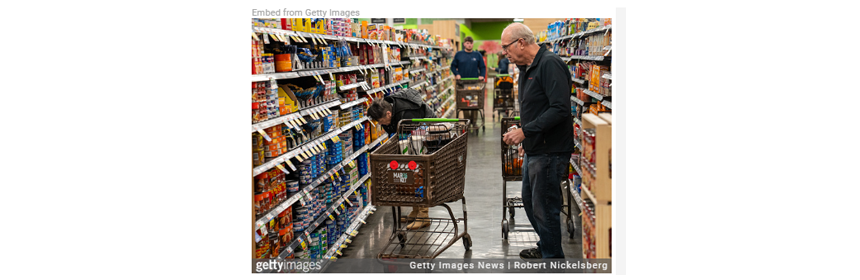
Go ahead. Tell me the higher prices we see staring back at us every day at the grocery store and the gas pump are just a temporary thing. I dare you.
The latest inflation report shows that price pressures heated up again in May, with the Consumer Price Index rising 0.5% month‑over‑month and 4.2% year‑over‑year, the highest annual rate since April 2023. That 4.2% figure matched economists’ expectations, but it still marks a clear acceleration from April’s 3.8% pace. The monthly increase was driven heavily by energy costs, which jumped 3.9% in May and are up 23.5% over the past year, reflecting the ongoing impact of the Iran conflict on global oil markets. Gasoline alone surged 7% in May and more than 40% compared with a year ago, accounting for the majority of the overall CPI increase.
Core inflation—which excludes food and energy—remained more subdued. Core CPI rose 0.2% for the month and 2.9% year‑over‑year, both in line with forecasts and cooler than April’s monthly reading. That suggests underlying inflation pressures are not spiraling, even as headline inflation is being pushed higher by energy. Some categories even showed mild relief: core commodities slipped 0.1%, and food prices rose only 0.2% on the month, though they remain 3.1% higher than a year ago. Still, essentials like electricity and medical care continue to climb at rates above 3%, contributing to the financial strain many households feel.
The report lands at a delicate moment for the Federal Reserve. Markets widely expect the Fed to hold rates steady at its June 17 meeting, but policymakers will be parsing this data closely for signs of persistent inflation. With headline inflation back above 4% and energy‑driven pressures unlikely to ease immediately, the Fed faces a tricky balance: acknowledge the progress in core inflation without ignoring the renewed squeeze on consumers. For households, the picture is similarly mixed—some categories are stabilizing, but the basics of daily life remain noticeably more expensive than a year ago.
The new Fed Chair, Kevin Warsh, faces a sharp collision between immense political pressure to cut interest rates and May’s hot inflation report that makes a rate reduction nearly impossible. The European Central Bank just raised rates, saying the risk of inflation caused by the shock rising energy prices must be countered.
Add to that the report on Producer Prices for May. The PPI captures inflation at the wholesale level—before costs reach consumers. PPI rose 1.1% month‑over‑month, matching the prior month but exceeding expectations of 0.7%. It rose 6.5% year‑over‑year, slightly above the 6.4% consensus and up from 5.7% previously.
Combined with rising unemployment claims, in spite of the positive employment numbers for May, these reports point to a cooling labor market but persistent inflation. That is the Federal Reserve’s nightmare.
As for Donald Trump, across multiple on‑camera exchanges, Trump responded to questions about inflation by saying:
“You know what I really love? I love the inflation.”
“The numbers were great… I love the inflation.”
He later told the New York Post that he meant he “loved” that inflation wasn’t even higher, arguing his comments were taken out of context. He said the inflation spike is a temporary consequence of the U.S.-Iran war, and insisted inflation will “come down like a rock” once the war in Iran ends.
Two notes. The consensus among economists is that even if the war were to end today, it will take months if not a year for prices to recover. And also, Trump has repeatedly predicted an end to the war he started more than 100-days ago. CNN has put together a devastating video montage.
We shall see.
####

