Tag Archives: United States

What Would Tom Say?

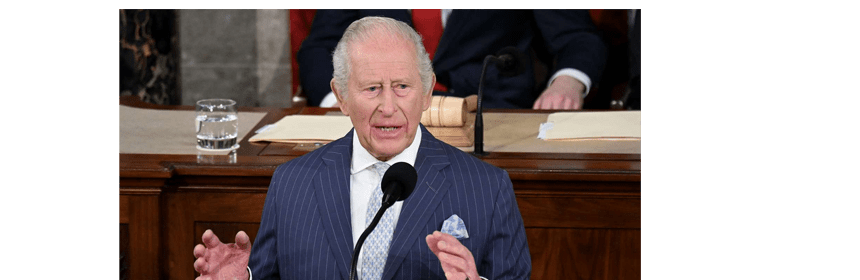
What Would Tom Say? That’s the question running through my mind as I watched Charles III, King of Great Britain and Ireland and lots of other places, address a joint session of the Congress of the United States of America.
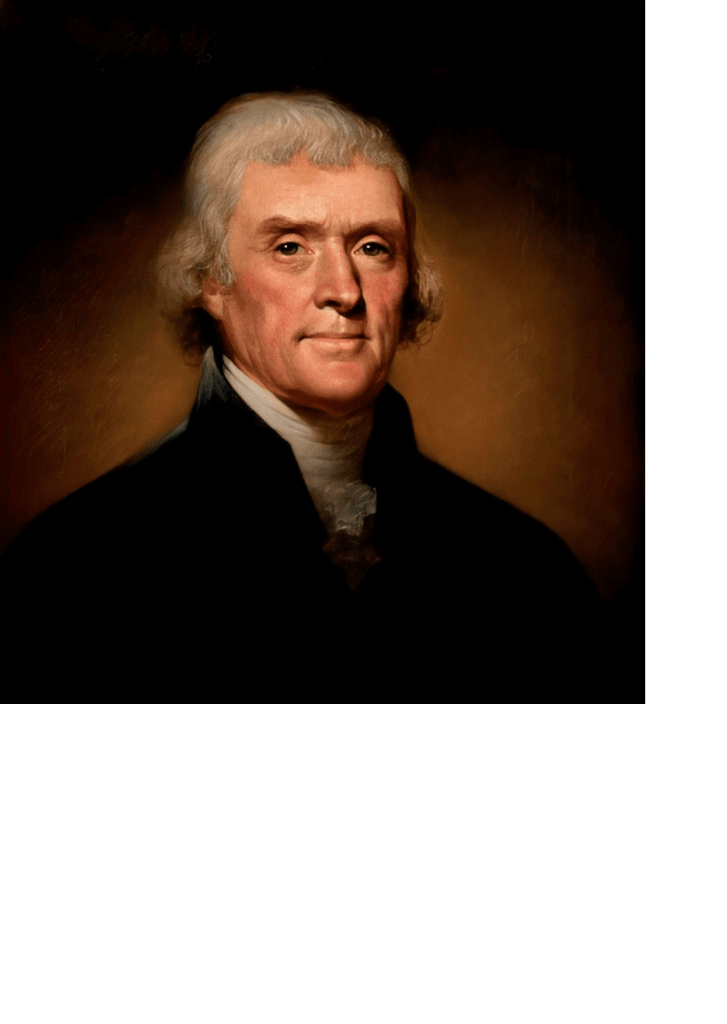
Tom is Thomas Jefferson, founding father, first Secretary of State, third President, and principal author of the Declaration of Independence from Great Britain by the thirteen colonies henceforth to be known as the United States of America.

In the Declaration, written 250 years ago, Jefferson accuses Britain’s then King George III of being a tyrant, “unfit to be the ruler of a free people.”

Jefferson asserts that “Governments are instituted among Men, deriving their just powers from the consent of the governed, — That whenever any Form of Government becomes destructive of these ends, it is the Right of the People to alter or abolish it.”

Which is what made Charles’ speech so extraordinary. The British monarch, subtly but unquestionably, lectured Donald Trump and the US Congress on the meaning of tyranny and a government’s responsibility to its people and the world. Charles was essentially holding a masterclass in democratic values, wrapped in diplomacy and charm.

He framed the moment as one of “great uncertainty,” said the US and UK face challenges “too great for any one nation to bear alone,” and declared that violent attacks on leadership “will never succeed”. He also emphasized that “executive power is subject to checks and balances,” which got attention because it sounded like a reminder about limits on presidential power.

The remarkable thing is how he pulled it all off, staying scrupulously nonpartisan on the surface while promoting centuries of common interests in areas where Trump has sought a sharp break from established US policy. Trump reportedly called it a “great speech.” Whether he caught all the subtext is another question.

Charles invoked the Magna Carta, the US Bill of Rights, “the rule of law, the certainty of stable and accessible rules, and an independent judiciary resolving disputes and delivering impartial justice” — and he did so on the same day the White House was pursuing new tariffs to circumvent a Supreme Court ruling. The timing was not lost on anyone.

After opening with a quote by Oscar Wilde, who was famously imprisoned for homosexual acts, Charles proclaimed that “it is the very fact of our vibrant, diverse, and free societies that gives us our collective strength,” a message fundamentally at odds with the Trump administration’s attacks on diversity.

Charles called for continued commitment to Ukraine and NATO, comments that came directly after Trump had openly expressed interest in withdrawing the US from NATO, citing what he felt was a lack of support from fellow members during the war with Iran.

He was unequivocal in rejecting Trump’s claim that NATO allies never sacrifice for the US, pointedly reminding Congress that after 9/11, when NATO invoked Article 5 for the first time, allied nations answered the call “shoulder to shoulder, through two World Wars, the Cold War, Afghanistan.”

Charles lamented the “disastrously melting ice caps of the Arctic,” in direct contrast to the White House’s position that climate change is a hoax. He urged Washington to avoid becoming “ever more inward-looking,” a direct pushback against Trump’s “America First” approach.

Whether Trump got the message is anyone’s guess. The critiques were wrapped in layers of diplomatic language, historical references (Magna Carta, English Common Law), and royal charm. Charles is a master of saying things with a smile that sting later on reflection. If you’re not listening for the subtext, you might just hear flattery.

What’s genuinely fascinating is that it almost doesn’t matter. The speech was addressed to Congress and the watching world just as much as to Trump. The lawmakers in that chamber, and the cameras broadcasting it, were the real audience for those pointed lines about judiciary independence and Ukraine.

Trump later called it a “great speech.” But the looks on the faces of Vice-President J.D. Vance and House Speaker Mike Johnson registered pain at several points. Both of them are actually interesting cases precisely because they do have historical literacy. Johnson is a constitutional lawyer by training, when Charles started citing Magna Carta and English Common Law as the roots of American democracy, Johnson would have felt every word of that. Vance has a Yale Law degree and has read widely. These aren’t men who would miss what Charles was doing.

The British Empire’s decline is actually a remarkably instructive case study precisely because it wasn’t conquered or suddenly collapsed. It hollowed out from a combination of forces, overextension, the costs of two world wars, rising nationalism in colonized nations, and critically, its own internal contradictions between preaching liberty while practicing empire. The decline was gradual, then sudden.

Charles, the literal embodiment of that former empire, was standing in Congress essentially saying we learned these lessons the hard way, please don’t repeat them. There’s something almost poignant about that. A king whose ancestors ruled a quarter of the world’s surface, now watching anxiously as the nation that replaced British dominance potentially walks toward some of the same traps.

Will we learn from history? Or repeat it?

####