Tag Archives: Thomas Jefferson

US at 250

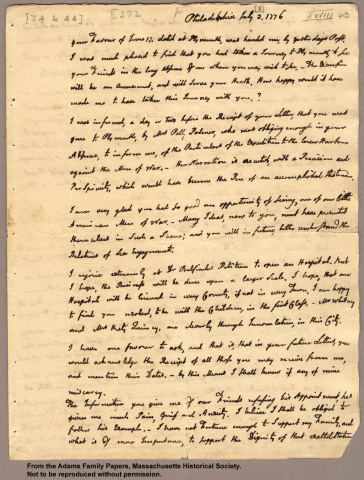
“The Second Day of July 1776, will be the most memorable Epocha, in the History of America. I am apt to believe that it will be celebrated, by succeeding Generations, as the great anniversary Festival. It ought to be commemorated, as the Day of Deliverance by solemn Acts of Devotion to God Almighty. It ought to be solemnized with Pomp and Parade, with Shews, Games, Sports, Guns, Bells, Bonfires and Illuminations from one End of this Continent to the other from this Time forward forever more.”

John Adams, Letter to Abigail Adams, July 3, 1776

John Adams, by far the most prescient of the founders, described Independence Day in this letter sent to his wife Abigail on July 3rd, 1776. He got most of it right.

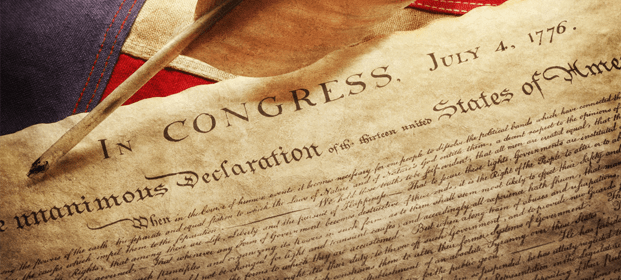
Adams predicted that the anniversary of American independence would be celebrated forever. He expected July 2 to become Independence Day because that was the day Congress approved Virginia’s resolution that the thirteen colonies declare their independence from England. Instead, we celebrate July 4, the date on which the text of the Declaration of Independence was approved and eventually printed with that date. But his description, parades, bells, fireworks (“illuminations”), bonfires, sports, and public celebrations, closely resembles how we celebrate the Fourth of July today.

Adams foresaw the growth of the United States of America to span the continent from west coast to east. And his letter to Abigail captures his confidence that the new nation would endure as a great nation among those of the world.

I often wonder, in this age of divisiveness, if we have fulfilled Adams’s dreams. The United States is unquestionably the world leader in many respects. It has the world’s biggest economy. It has grown dramatically in population. It has expanded to stretch from one ocean to the next. It claims to have the most powerful military, although it doesn’t seem to be able to keep a strait essential to the world’s energy supply open. It certainly outspends the next dozen or so countries on that military. Adams foresaw those things and I think on those points the United States today would please him.

But he would be less pleased to discover that his biggest fears have also come to pass. He wrote of the dangers facing the new republic. His biggest fear came not from without, but from within. He warned that avarice could produce leaders who put personal gain over the needs of the people. He predicted that under certain circumstances, factions succumbing to greed for power and money could infect multiple branches of government and defeat the system of checks and balances the framers wrote into the Constitution in 1787. I do not believe he would be pleased with the current state of affairs in Washington.

The Declaration was always a contradiction. It famously contains what the great biographer Walter Isaacson calls, “The Greatest Sentence Ever Written.” Yet the author of, ““We hold these truths to be self-evident, that all men are created equal, that they are endowed by their Creator with certain unalienable Rights, that among these are Life, Liberty, and the pursuit of Happiness,” Thomas Jefferson, was a slaveholder throughout his entire life, as were many of the Revolutionary era leaders.

Jefferson listed slavery as one of the evils brought to the new world by the King of England. But that sentence was removed from the Declaration during the final debate. Jefferson later wrote it was the price for gaining the acquiesce of South Carolina and Georgia to the independence resolution.

Slavery wasn’t abolished until the 13th Amendment was ratified in 1865, after the Civil War. Voting rights for women didn’t arrive until the 20th century, with ratification of the 19th Amendment in 1920.

For me the obvious contradiction between the words of the Declaration and reality is resolved by viewing the Declaration we celebrate today as aspirational, rather than literal. The document was a statement of profound principles and ideals, rather than a word-for-word reflection of 1776 reality. It remains so to this day as we strive to, in the words of the great preamble to the Constitution, “form a more perfect union.” For me, that gives hope that we can come closer to our goals. Someday.

“You will think me transported with Enthusiasm but I am not.—I am well aware of the Toil and Blood and Treasure, that it will cost Us to maintain this Declaration, and support and defend these States.—Yet through all the Gloom I can see the Rays of ravishing Light and Glory. I can see that the End is more than worth all the Means. And that Posterity will tryumph in that Days Transaction, even altho We should rue it, which I trust in God We shall not.”

John Adams. 1776

Do we see on the occasion of our 250th birthday John’s rays of ravishing light and glory?

Do we agree with Adams, that the end is more than worth all the trials and tribulations, the blood and the treasure? That the end is more than worth all the means?

It’s up to us now. And to the generations to come.

Happy Birthday America.

####