Jim Lovell

The world lost one of its greatest space explorers with the passing of James Arthur “Jim” Lovell Jr., who died peacefully on this week at the age of 97. Lovell embodied the spirit of American exploration and the courage to venture into the unknown that defined the golden age of space exploration.

Lovell’s extraordinary career spanned four spaceflights that helped write the early chapters of humans in space. He was among the first three men to leave Earth’s orbit and journey to the moon as command module pilot of Apollo 8 in December 1968, a mission that gave humanity its first close-up view of the lunar surface and the iconic “Earthrise” photograph that forever changed how we see our home planet.
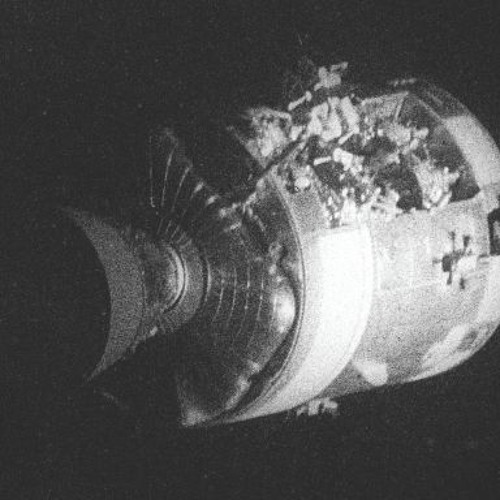
But it was his fourth and final mission, Apollo 13 in April 1970, that would cement his place in history not just as an explorer, but as a symbol of human ingenuity, leadership, and determination in the face of seemingly impossible odds.
When an oxygen tank explosion turned what should have been the third lunar landing into a desperate fight for survival, Commander Lovell’s steady leadership and the famous words “Houston, we have a problem” became part of the American lexicon. His calm professionalism and unwavering focus helped bring his crew safely home in what NASA called a “successful failure.”
What made Lovell truly special was not just his achievements in space, but his dedication to inspiring future generations long after his flying days were over. For more than five decades following Apollo 13, he traveled the country speaking to schools, universities, and community groups, sharing the wonder of space exploration and encouraging young people to pursue careers in science, technology, engineering, and mathematics.
His message was always the same: that with determination, teamwork, and careful preparation, no challenge was insurmountable. He understood that his role as an astronaut came with the responsibility to be a teacher and an inspiration, and he embraced that calling with the same dedication he brought to his missions.
Actor Tom Hanks, who played Lovell in Ron Howard’s 1995 film, “Apollo 13,” spoke for us all in an Instagram post:

Lovell’s legacy extends far beyond his 715 hours in space. He was a decorated naval aviator, a test pilot, and a mechanical engineer whose contributions to aviation and spaceflight safety protocols continue to protect crews today. His co-authored book “Lost Moon,” was used in writing the script for the “Apollo 13,” film, ensured that the story of that harrowing mission, and the broader story of the Apollo program, would continue to inspire new generations.
Throughout his life, Lovell exemplified the values that made the space program great: curiosity about the unknown, dedication to excellence, humility in the face of the cosmos’s vastness, and an unshakeable belief in the power of human cooperation to overcome any obstacle.
#####


This is a great article of summing up Mr. Lovell, not only his task to inspire others to see the galaxy but, to contribute to space exploration.
LikeLike
Pingback: Artemis II | Scott Gurvey's Public Offerings